
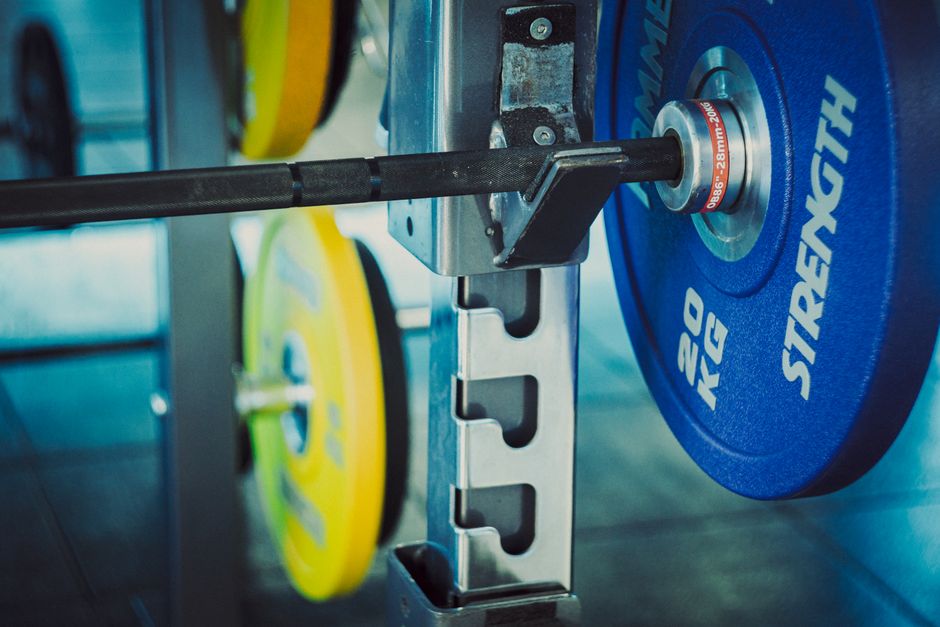

American Barbell power rack J-hook wear is one of the most common strength equipment issues we see in home gyms across Dallas Fort Worth. The symptom is easy to overlook at first: the barbell feels slightly off when you rack it, or you notice fresh scratches on the knurling that weren't there before. By the time most homeowners call us, the J-hook liner is either completely gone or the hook itself has developed a groove deep enough to catch and hold the bar at an angle. That is a loaded bar problem, and it needs to be fixed before someone gets hurt under a squat or bench press.
Common Symptoms
- Barbell slides or rolls in the hook: The bar does not sit flat and stable. It shifts slightly when you load plates or step under it.
- Visible groove or gouge in the hook body: You can see a worn channel where the bar knurling has cut into the steel or UHMW liner over hundreds of sessions.
- Scratched or chewed-up knurling: The bar itself shows damage from metal-on-metal contact, which means the protective liner has worn through.
- Uneven bar height side to side: One hook has worn more than the other, causing the bar to sit at a slight angle when racked.
- Clicking or clunking when racking the bar: The hook liner has broken apart and loose pieces are shifting under load.
- Hook pin wobble or looseness: The attachment pin that locks the J-hook to the upright has worn its hole, allowing the whole hook to shift under load.
- Difficulty seating the bar consistently: You have to look down and guide the bar every time because the hook no longer provides a reliable catch.
Root Causes: What Is Actually Happening
- UHMW liner wear-through: American Barbell J-hooks use a UHMW polyethylene liner to protect both the hook and the bar. This liner is designed to be the sacrificial component. After heavy use, typically a few years of daily training, the liner compresses, cracks, and eventually disappears. Once it is gone, the bare steel hook contacts the bar knurling directly and both surfaces start destroying each other.
- Improper racking technique under fatigue: Most liner damage happens not during the lift but during the rack. When a lifter is exhausted at the end of a heavy set, the bar gets dropped onto the hooks at an angle or with excessive force. That repeated impact concentrates wear on one edge of the liner rather than distributing it evenly across the full contact surface.
- Mismatched hook height causing lateral bar pressure: If the J-hooks are set at slightly different pin holes on each upright, the bar sits crooked. Every rep loads the hooks unevenly, and the low side takes the brunt of the wear. This is a setup error that accelerates liner failure significantly.
- Pin hole elongation in the upright: On high-use racks, the pin holes in the uprights can elongate over time from repeated loading and unloading. When the hole becomes oval instead of round, the J-hook pin rocks back and forth under load. This transfers stress to the hook body and liner in ways the hardware was not designed to handle.
- Corrosion in garage gym environments: Dallas Fort Worth summers push garage temperatures well above 100 degrees with high humidity. That combination accelerates surface rust on uncoated steel hook bodies. Once rust develops under the liner, it lifts and cracks the UHMW from below, causing premature failure even on hooks that look fine from the outside.
- Using the wrong replacement liners: Some homeowners order generic UHMW liners that are close in size but not an exact fit for American Barbell hook geometry. A liner that is too thin or too short leaves gaps where the bar contacts bare steel, and the wear pattern restarts immediately.
What NOT to Do
- Do not wrap the hooks in tape as a permanent fix: Electrical tape, duct tape, and foam wrap are not load-bearing materials. They compress unevenly, create false security, and can cause the bar to slip sideways during a heavy lift. We have seen this in the field and it is not a safe workaround.
- Do not continue training on visibly grooved hooks: A groove deep enough to see means the bar is being guided into a specific position every time. If that position shifts even slightly, the bar can roll off the hook. Under a loaded squat or bench press, that outcome is serious.
- Do not assume both hooks wear at the same rate: Most lifters favor one side slightly, and one hook almost always shows more wear than the other. Replacing only the visibly damaged hook and leaving the worn-but-not-yet-failed hook means you will be back to the same problem in a fraction of the time. Replace them as a matched pair.
- Do not use J-hooks from a different rack brand as substitutes: American Barbell uprights use specific pin spacing and hole dimensions. A hook from a different manufacturer may appear to fit but can seat loosely or at the wrong angle, creating new problems with bar stability and upright wear.
Professional Power Rack Repair in Dallas Fort Worth
At 2EZ TEK, we work on home gym strength equipment every week across Dallas Fort Worth, and residential clients are exactly who we built this business to serve. A lot of repair companies focus exclusively on commercial gyms and treat homeowners as an afterthought. We do not operate that way. Whether your American Barbell rack is in a dedicated home gym, a garage, or a spare bedroom, we treat the job with the same attention we give any commercial account. We carry replacement UHMW liners and can source American Barbell-compatible J-hook hardware to get your rack back to safe, stable operation, typically within the same week you call.
We also service all major strength and cardio brands including NordicTrack, ProForm, Life Fitness, and Precor, so if you have other equipment in your home gym that needs attention, we can handle it in the same visit. With over 500 five-star reviews from homeowners across the DFW area, our track record speaks for itself. If you want to dig into your equipment's documentation before we arrive, 2EZ TEK maintains a free manual library at 2eztek.com/manuals where you can find assembly guides, service docs, and owner manuals for a wide range of equipment.
J-hook wear is one of those problems that is inexpensive and straightforward to fix when caught early. The cost goes up significantly if the hook body itself has been damaged, if the upright pin holes have elongated, or if a bar has been dropped due to hook failure and something else on the rack has been bent or cracked. If you are already noticing symptoms, the right time to address it is now, not after the next heavy training session.
Frequently Asked Questions
Can I just buy replacement UHMW liners and install them myself?
Yes, liner replacement is a straightforward job if the hook body itself is still in good condition. The liner presses or slides into the hook and is held in place by friction and the bar's weight. The tricky part is confirming you have the correct liner dimensions for American Barbell hooks specifically, and inspecting the hook body for hidden damage before you reinstall. If the steel has a groove worn into it, a new liner will not fix the underlying problem and will wear out much faster than it should.
How do I know if the J-hook body needs to be replaced versus just the liner?
Run your finger along the inside curve of the hook where the bar sits. If you feel a groove, ridge, or sharp edge in the steel itself, the hook body is damaged and needs to be replaced. A liner alone will not bridge that gap safely. If the steel feels smooth and the damage is only in the plastic liner material, a liner swap is the right call.
Is this repair covered under American Barbell's warranty?
American Barbell offers structural warranties on their rack frames, but J-hook liners are considered wear items, similar to a treadmill walking belt or a bike seat. Normal wear-through from regular use is typically not covered. If a liner failed unusually fast due to a manufacturing defect in the liner material, that is worth contacting American Barbell about directly. For most homeowners, liner replacement is simply a maintenance cost that comes up every few years depending on training volume.
Get Your Power Rack Running Again
If your American Barbell power rack J-hooks are showing wear, contact 2EZ TEK today and we will get a technician out to your Dallas Fort Worth home gym same-week to assess the damage and get you back under the bar safely.