

The Little Button That Protects Your Machine
Most treadmill owners have hit that reset button on the back or underside of their machine without giving it much thought. Push it, the machine comes back on, problem solved. But that small component is actually a circuit breaker, and it is one of the most important safety devices built into your fitness equipment. Understanding what it does and why it trips can save you from a damaged motor, a burned-out control board, or worse, an electrical fire.
What a Circuit Breaker Actually Does
The primary job of a circuit breaker in a fitness machine's power supply is to protect the circuit from overcurrent and short circuits. Here is what that means in plain terms.
Your treadmill's drive motor draws electrical current to operate. Under normal conditions, that current stays within a safe range. But when something goes wrong, current can spike far beyond what the wiring and components are designed to handle. A circuit breaker monitors that flow constantly. The moment current exceeds a safe threshold, the breaker trips and cuts power to the machine. It is essentially a self-resetting fuse that stands between your equipment and serious electrical damage.
Overcurrent vs. Short Circuit: Two Different Problems
These two terms get used interchangeably but they describe different failure modes.
- Overcurrent happens when the motor or another component draws more amperage than the circuit is rated for. This can happen gradually, often caused by a worn belt, a failing drive motor, or a seized roller bearing forcing the motor to work harder than it should.
- Short circuit happens when current finds an unintended path, usually because insulation has worn through and two conductors are touching. This causes an immediate and dramatic current spike. The breaker trips instantly.
Both situations are dangerous without that breaker in place. Sustained overcurrent generates heat that degrades wiring insulation and can damage the motor controller. A short circuit, left unprotected, can arc and ignite surrounding materials.
Why Your Breaker Keeps Tripping
A breaker that trips once and stays reset is usually a one-time event, maybe a power surge or a brief overload. A breaker that trips repeatedly is telling you something specific is wrong. Common causes include:
- Worn or over-tightened drive belt causing excessive motor load
- Dry or seized rollers creating mechanical resistance the motor has to fight
- Failing drive motor drawing more current as its windings degrade
- Damaged motor controller board sending incorrect voltage signals
- Compromised wiring with cracked or worn insulation creating intermittent shorts
- Undersized home circuit where the wall outlet cannot supply adequate power for the machine
In North Texas, heat plays a role too. Machines stored in garages during DFW summers can experience accelerated insulation breakdown and bearing wear, both of which put extra strain on the electrical system.
What a Certified Technician Checks
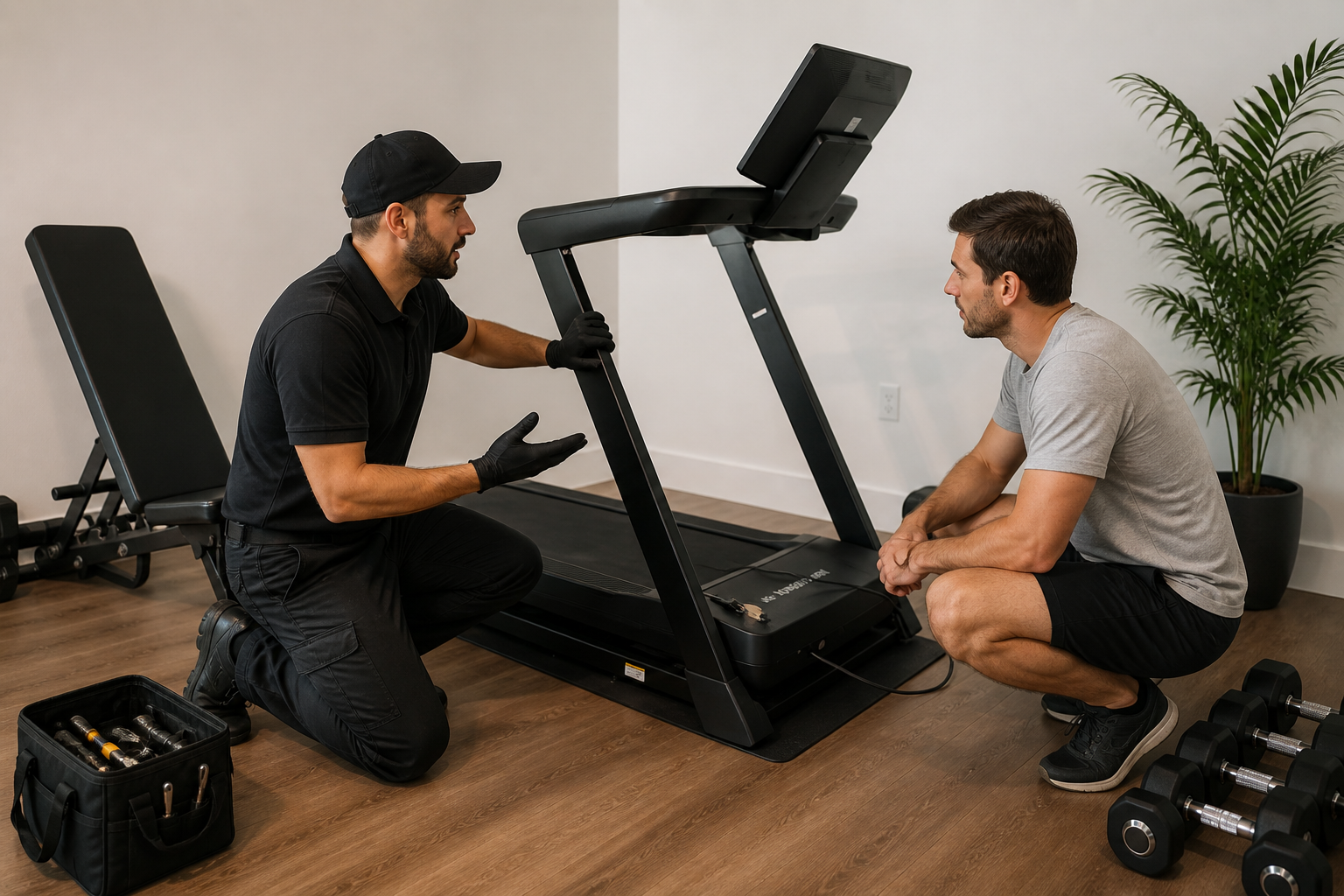
When a 2EZ TEK technician responds to a tripping breaker call, the diagnostic process goes well beyond pressing the reset button and watching what happens next. Here is what a proper electrical safety inspection covers:
- Amperage draw test using a clamp meter to measure actual current draw at the motor under load. This tells us immediately if the motor is pulling more than its rated amperage.
- Drive belt inspection checking tension and wear, because a belt that is too tight is one of the most common hidden causes of motor overload.
- Roller and bearing check to identify mechanical drag that forces the motor to compensate with higher current draw.
- Wiring harness inspection looking for pinched, cracked, or abraded insulation that could cause intermittent shorts.
- Motor controller board evaluation checking for burnt components or failed capacitors that affect how power is regulated to the motor.
- Wall outlet verification confirming the circuit supplying the machine is properly rated and grounded.
The breaker itself is rarely the problem. It is almost always the symptom of something else, and replacing the breaker without finding the root cause means the new one will trip too, or worse, fail to trip when it should.
Do Not Bypass the Breaker
This needs to be said directly. Some people, frustrated with a machine that keeps shutting off, will bypass the circuit breaker entirely using a jumper wire or a higher-rated fuse. This removes the only protection standing between your equipment and an electrical fire. It is genuinely dangerous and voids any remaining warranty or service coverage. If your machine keeps tripping, the answer is diagnosis, not bypass.
Get a Real Answer From a Certified Tech
2EZ TEK serves homeowners and commercial gym facilities across all of DFW with mobile, on-site fitness equipment repair. Our nationally certified technicians have seen every variation of this problem and carry the diagnostic tools to find the actual cause, not just reset the breaker and hope for the best. With a 4.9-star rating and over 500 reviews, we have built our reputation on fixing things right the first time.
If your treadmill, elliptical, or other fitness machine keeps tripping its breaker or you have noticed any electrical symptoms like burning smells, flickering displays, or unexpected shutdowns, call 2EZ TEK at (972) 807-7232 and schedule a diagnostic visit before a small electrical issue becomes a much bigger repair.