
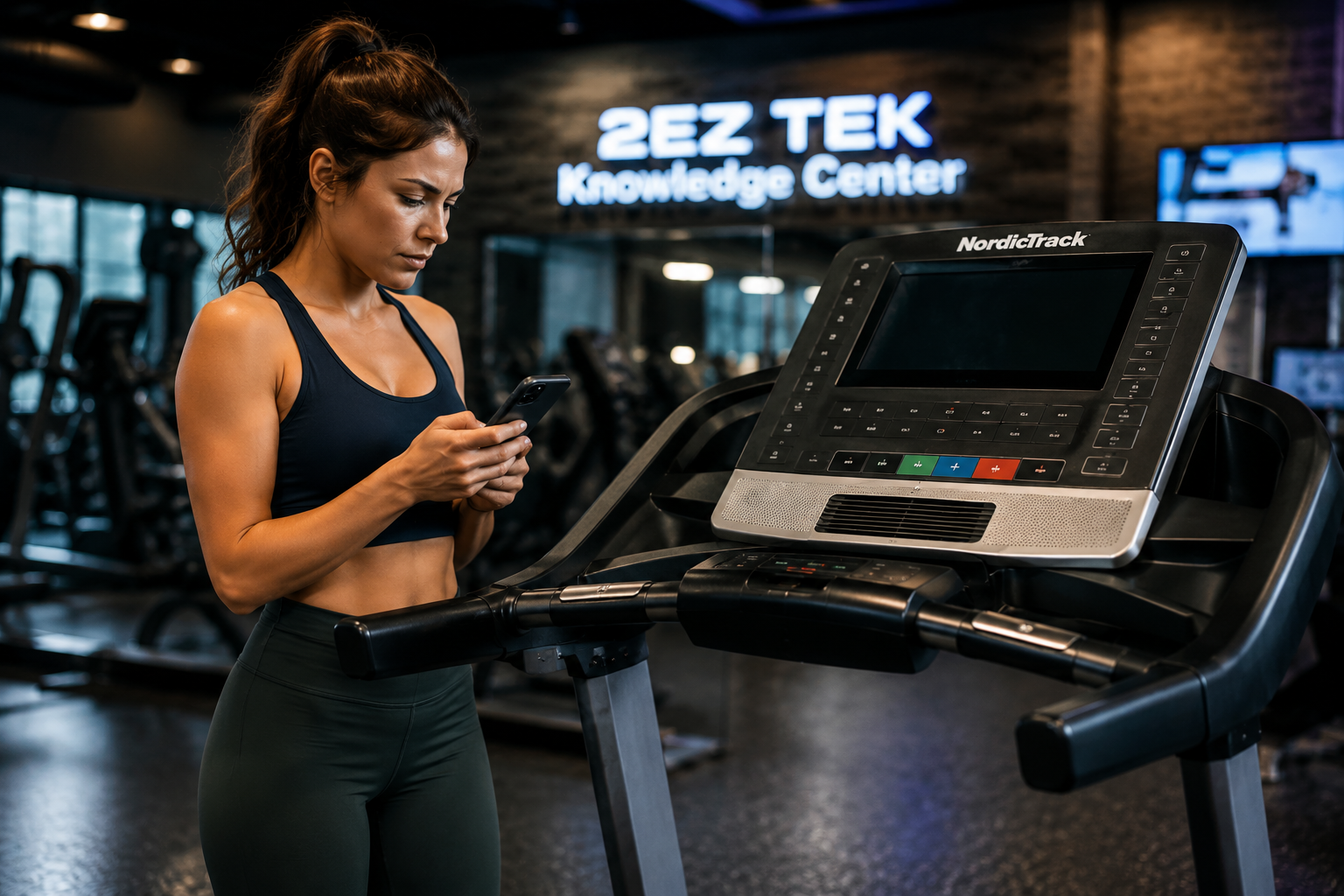

Fitness equipment in commercial facilities fails differently than equipment in a home gym. The load is higher, the users are more varied, and the consequences of downtime are more expensive. A treadmill that stops working in a resident's home is an inconvenience. A treadmill that stays broken in an apartment fitness center for three weeks shows up in reviews, resident complaints, and lease renewal conversations. The math on commercial gym maintenance is straightforward: the cost of a service contract is a fraction of the cost of reactive repairs plus the reputational damage that comes with neglected equipment.
2EZ TEK provides commercial gym equipment maintenance and repair contracts for apartment communities, hotels, corporate campuses, and private training facilities across Dallas Fort Worth. This guide explains what a professional maintenance program actually covers, what to look for when evaluating a service provider, and what the most common equipment failures in commercial facilities look like before they become visible problems.
Who Manages Commercial Gym Equipment in DFW
The fitness equipment in most commercial facilities in Dallas Fort Worth is managed by one of three types of operators, each with different service needs:
- Apartment and multifamily communities. Property managers are responsible for fitness center equipment as part of the common area amenity package. Residents expect working equipment and have strong opinions about it. In a competitive DFW rental market with new Class A properties opening constantly, a poorly maintained fitness center is a meaningful competitive disadvantage.
- Hotels and hospitality properties. Guest satisfaction scores and review platform ratings are directly affected by fitness room equipment condition. A hotel guest who finds broken equipment mentions it. A hotel guest who finds clean, functional, well-maintained equipment does not notice, which is exactly the outcome you are paying for.
- Corporate wellness facilities and campuses. HR and facilities teams responsible for employee fitness centers face the same liability and operational concerns as any other commercial facility. Equipment in a corporate gym is used by employees whose safety and satisfaction reflect directly on the benefits program.
Each of these operators is managing equipment they did not select, in facilities where they cannot supervise use, for a population of users with varying experience levels and no incentive to treat the equipment carefully. Professional maintenance is how you manage that reality.
What a Commercial Maintenance Contract Covers
A professional commercial gym maintenance program with 2EZ TEK includes the following, structured around your facility's machine count and usage level:
Scheduled Preventative Maintenance Visits
Quarterly or semi-annual visits depending on machine count and usage volume. Each visit covers belt lubrication and tension adjustment on all treadmills, drive system inspection on all cardio equipment, console and cable inspections on strength equipment, safety checks on all machines, and cleaning of motor compartments and drive covers. Each visit is documented per machine so you have a full service history for every piece of equipment in the facility.
The purpose of scheduled visits is catching problems before they become failures. A treadmill belt that is approaching the end of its service life identified during a quarterly visit is a planned belt replacement. A treadmill belt that fails during a resident's workout is an emergency repair, a potential liability, and a complaint. The difference in cost between the two outcomes is significant.
Priority Emergency Response
Commercial maintenance contract clients receive priority scheduling for repair calls. When a machine goes down between scheduled visits, your call goes to the front of the queue. 2EZ TEK provides same-day and next-day response for commercial clients across DFW. The goal is minimizing the window between equipment failure and return to service.
Documented Service History
Every service visit and repair is logged with date, technician, machine, and work performed. For property managers, this documentation supports warranty claims, demonstrates due diligence in maintenance, and provides the evidence needed if an equipment-related incident ever becomes a liability question. A machine with a documented service history is a different conversation than a machine with no records.
Multi-Location Coordination
For property management companies, hotel groups, and operators with multiple DFW locations, 2EZ TEK coordinates service programs across properties under a single account relationship. Consolidated billing, unified service records, and a single point of contact for scheduling simplify the administrative side of commercial equipment management.
What Breaks First in Commercial Facilities
Commercial gym equipment fails at higher rates than residential equipment because it is used more, maintained less, and operated by users who do not own it. The most common failure patterns in DFW commercial facilities:
- Treadmill belts. The single highest-frequency repair in commercial settings. Belts in apartment gyms and hotel fitness rooms are rarely lubricated on any schedule. An unlubricated belt generates heat that accelerates wear on the belt surface, the deck, and the motor. A belt that should last 3 to 5 years in a residential home may last 12 to 18 months in a high-traffic commercial facility with no maintenance program.
- Console failures on connected equipment. The connected fitness wave brought touchscreen consoles to commercial equipment from Life Fitness, Precor, Matrix, and others. These consoles run on embedded operating systems that require software updates, restart cycles, and clean power to operate reliably. Commercial facilities that never restart their equipment or that run it on shared circuits see console failures at much higher rates.
- Cable and pulley systems on strength equipment. Cables stretch, fray, and break. Pulleys wear and develop noise. In commercial settings these issues develop faster because the equipment runs at high cycles daily. A fraying cable on a cable machine is a safety issue that requires immediate attention, not a wait-and-see situation.
- Elliptical drive systems. Ellipticals in commercial settings develop noise and resistance issues from worn bearings, loose hardware, and drive belt wear. The symptoms are gradual and easy to ignore until the machine becomes genuinely uncomfortable or loud enough to generate complaints.
- Bike resistance systems. Both upright and recumbent bikes in commercial settings see resistance system failures from worn magnetic brake components, calibration drift, and control board issues. A bike that does not change resistance is not broken in an obvious way, but it is not providing the workout it should.
What to Look for in a Commercial Equipment Service Provider
Not every fitness equipment repair company takes commercial accounts, and not every company that claims to handle commercial work has the capacity to actually deliver on it. When evaluating a service provider for a commercial maintenance contract, ask these questions:
- Do they service multiple brands? Commercial facilities rarely have all one brand of equipment. A service provider that only works on specific brands cannot be a single point of contact for your whole facility.
- Can they provide documented service records per machine? A verbal assurance that maintenance was performed is not a record. You need per-machine documentation you can produce if needed.
- What is their emergency response time? Ask specifically about same-day and next-day availability for commercial clients, not just general scheduling lead times.
- Do they have references from similar facilities? A service provider that works in apartment communities, hotels, or corporate facilities understands the operational realities of commercial gym management. One that only does residential service does not.
- How do they handle parts sourcing? A provider that can only access manufacturer parts at full retail price will charge more and wait longer for components than one with established relationships with multiple parts suppliers.
The DFW Commercial Fitness Equipment Market in 2026
Dallas Fort Worth is adding residential density, corporate campuses, and hospitality properties at a rate almost no other US market matches. Every new multifamily development above a certain price point includes a fitness center as a standard amenity. Every new corporate campus in the Platinum Corridor, Legacy, and Las Colinas submarkets includes employee wellness facilities. The equipment installed in these facilities today will require professional service within 12 to 18 months of opening.
Industry data from 2025 and 2026 shows that 42 percent of fitness equipment repairs now involve connected or smart equipment: touchscreens, IoT-connected machines, and platforms that require software management alongside mechanical maintenance. The operators who establish a professional service relationship before their first equipment failure are in a fundamentally different position than those who search for a technician after a machine goes down.
2EZ TEK Commercial Gym Maintenance Programs in Dallas Fort Worth
2EZ TEK services commercial fitness facilities across the full Dallas Fort Worth metro area. Our commercial programs include scheduled preventative maintenance, priority emergency response, documented service records per machine, and multi-location coordination for property management companies and hotel groups.
We service all major equipment brands found in DFW commercial facilities: Life Fitness, Precor, Matrix, Cybex, Technogym, TRUE Fitness, StairMaster, Rogue, Hammer Strength, Star Trac, FreeMotion, and others. We also service connected equipment from Peloton, NordicTrack, and Tonal that has found its way into premium residential amenity spaces.
With over 500 five-star Google reviews from DFW homeowners and facility managers, and a service area covering every major DFW submarket, 2EZ TEK is the commercial gym maintenance provider built for this market. To discuss a maintenance contract for your facility, call us at (972) 807-7232 or submit a service inquiry online. We will schedule a walkthrough of your fitness center and provide a custom program quote based on your machine count, usage level, and service requirements.
Frequently Asked Questions
How much does a commercial gym maintenance contract cost in DFW?
Pricing is based on machine count, facility type, visit frequency, and whether emergency response priority is included. Apartment communities typically start at quarterly scheduled visits plus priority emergency response. We provide a custom quote after a facility walkthrough. The cost of a maintenance contract is consistently less than the cost of a single reactive repair call plus the resident or guest impact from extended equipment downtime.
Do you service apartment fitness centers with just a few machines?
Yes. We serve facilities of all sizes across DFW, from boutique apartment communities with 4 to 6 machines to large clubhouse gyms with 20 or more pieces of equipment. Machine count affects the pricing and visit structure, not whether we take the account.
What happens if a machine breaks between scheduled maintenance visits?
Commercial maintenance contract clients have priority access to our emergency repair schedule. When equipment goes down between visits, you call us directly and we dispatch a technician on a priority basis. Our goal is same-day or next-day response for all commercial contract clients across DFW.
Can you service equipment that is still under manufacturer warranty?
Preventative maintenance visits, belt service, lubrication, and non-warranty repairs do not affect manufacturer warranty coverage. For warranty repair claims, we can help you document the failure and navigate the manufacturer's warranty process. Our maintenance documentation also supports warranty claims by demonstrating that the equipment was properly maintained according to manufacturer recommendations.
Do you provide service records that a property manager can share with ownership?
Yes. Every service visit generates a documented record covering the date, technician, machines serviced, work performed, and any issues noted for follow-up. This documentation is available per visit and as a running service history per machine. Property managers use it for ownership reporting, warranty documentation, and liability protection.