
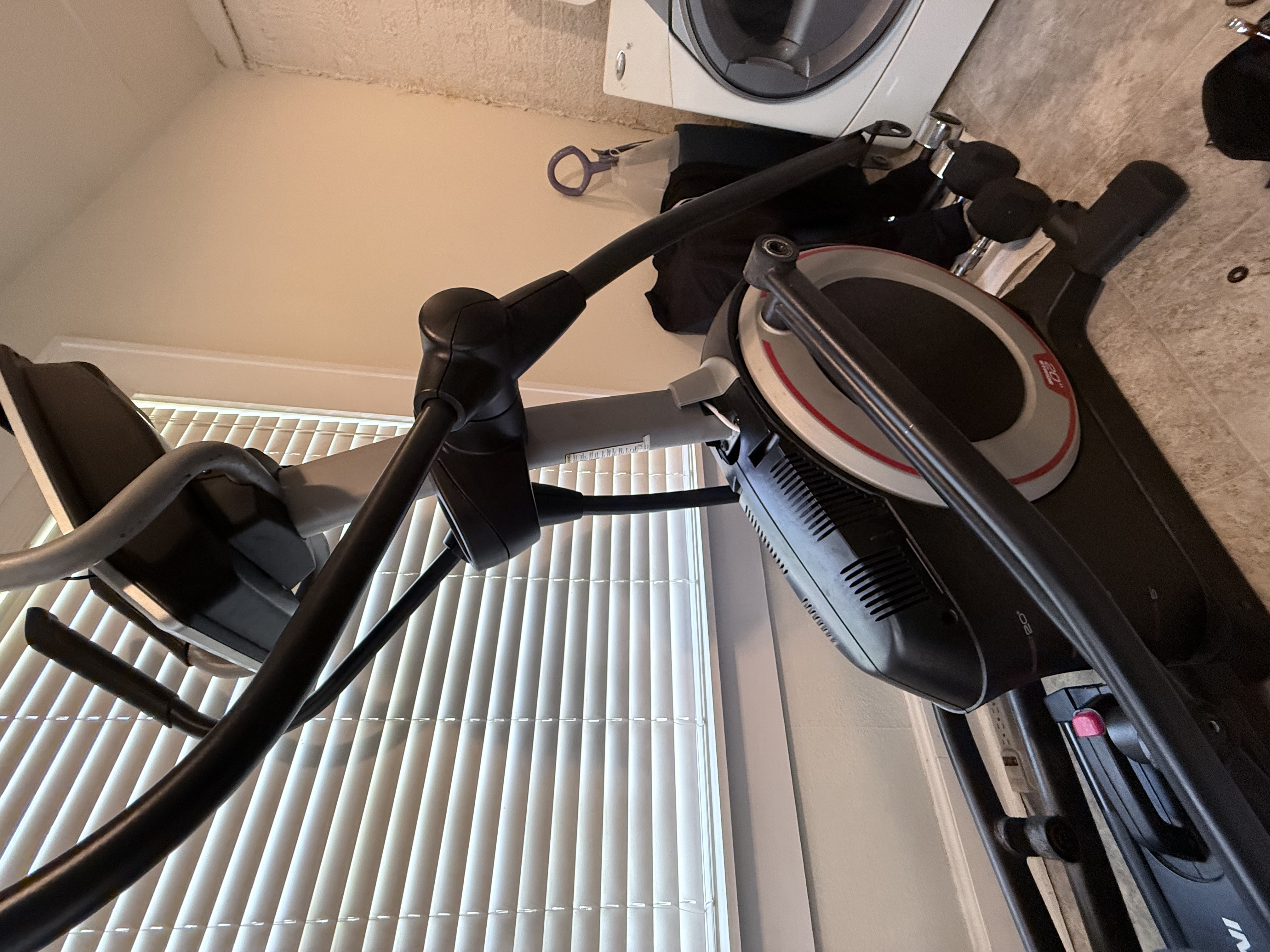

Elliptical repair in Dallas is one of the most common service calls we handle at 2EZ TEK, and for good reason. Ellipticals are mechanically complex machines with moving pivot points, drive systems, resistance components, and electronics all working together at once. When something goes wrong, the symptoms can range from a faint clicking noise to a machine that won't power on at all. This guide breaks down what you're likely dealing with, what's actually causing it, and what to avoid doing before a technician gets to your home.
Common Symptoms
- Clicking or popping noise with each stride: Usually rhythmic and tied to your pedal cycle. This is one of the most reported elliptical complaints and almost always points to a mechanical issue rather than an electrical one.
- Resistance not changing: You press the resistance button and nothing happens, or the machine jumps erratically between levels. The eddy current brake or resistance magnet system is likely involved.
- Console shows no power or partial display: The screen is dark, flickering, or showing only partial readouts. Could be a power supply issue, a failed console board, or a loose wire harness connection.
- Wobbly or unstable stride: The pedals feel uneven, one side dips, or the whole frame rocks. Worn pivot bushings or loose hardware are usually responsible.
- Grinding or scraping sound: A heavier, continuous sound that gets worse over time. Often caused by a dry or damaged flywheel bearing or a worn drive belt rubbing against its housing.
- Speed or distance readings are inaccurate or missing: The console shows dashes or zeros where your stats should be. The reed switch or its magnet on the flywheel is a common culprit here.
- Pedal arm feels loose or has lateral play: One or both pedal arms wobble side to side during use. This points to worn linkage bushings or a loose crank arm bolt.
Root Causes: What Is Actually Happening
- Worn or dry pivot bushings: Ellipticals have multiple pivot points where the upper and lower linkage arms connect to the frame and pedal assembly. These bushings are typically nylon or bronze and wear down over time, especially without lubrication. When they go, you get clicking, wobble, and uneven stride feel that gets progressively worse.
- Failed or misaligned reed switch: The reed switch is a small magnetic sensor mounted near the flywheel. It counts rotations and sends data to the console. If the magnet on the flywheel shifts position or the reed switch itself fails, your console loses speed and distance data entirely. Sometimes the fix is just repositioning the magnet, other times the switch needs replacement.
- Resistance magnet or eddy current brake issues: Most modern ellipticals use an eddy current brake system where a resistance magnet moves closer to or farther from the flywheel to increase or decrease drag. The motor that drives this magnet, sometimes called a resistance motor or servo, can fail or lose calibration. The result is resistance that sticks at one level or behaves unpredictably.
- Drive belt wear or tension loss: The drive belt connects the flywheel to the crank system and stretches over time. A loose drive belt causes slipping sensations mid-stride and can create a rhythmic thwapping sound. Replacing the belt and setting proper tension on the tension roller restores the smooth feel the machine had when new.
- Flywheel bearing failure: The flywheel spins on sealed bearings that eventually wear out, especially on machines used daily. A failing flywheel bearing produces a grinding or rumbling noise that gets louder as the bearing degrades. Left unaddressed, it can damage the flywheel shaft itself, turning a straightforward bearing swap into a more involved repair.
- Loose or corroded wire harness connections: Ellipticals flex and move with every stride, and the wire harnesses that run through the frame experience constant vibration. Connectors work loose over time, and in humid garages or home gyms in the DFW area, corrosion on connector pins can cause intermittent console failures, resistance errors, and power issues that look like board failures but are actually just bad connections.
What NOT to Do
- Do not over-lubricate the rail or stride track: Some homeowners spray WD-40 or silicone lubricant on every moving part they can reach. Excess lubricant attracts dust and debris, works its way into bearings, and can cause the drive belt to slip. Use only manufacturer-specified lubricants on designated surfaces.
- Do not ignore a clicking noise and keep using the machine: A small click usually means a bushing or hardware issue that is cheap and easy to fix early. Running the machine for weeks with that noise accelerates wear on surrounding components, and what started as a twenty-dollar bushing job can turn into a full linkage replacement.
- Do not assume a dead console means a dead machine: Console boards on ellipticals fail, but so do the power supplies and wire connections feeding them. Ordering a replacement console board before diagnosing the actual failure point is an expensive guess. A technician can isolate whether the problem is the board, the power supply, or a simple wiring issue before any parts are ordered.
- Do not attempt to adjust the resistance magnet without knowing the calibration procedure: The eddy current brake system on most ellipticals has a specific calibration sequence. Moving the magnet assembly by hand without following that procedure can put the system out of range entirely, making resistance either non-functional or permanently maxed out.
Professional Elliptical Repair in Dallas Fort Worth
2EZ TEK has handled elliptical repairs across Dallas Fort Worth for years, and we have earned over 500 five-star reviews by doing the job right the first time. We service all major brands including NordicTrack, ProForm, Bowflex, Precor, Life Fitness, Schwinn, Sole, and Horizon. Whether your machine is making noise, losing resistance, or simply refusing to power on, we carry the diagnostic tools and common replacement parts to get most repairs done in a single visit.
One thing that sets 2EZ TEK apart in DFW is that we specifically serve residential clients. Many of our competitors focus exclusively on commercial gyms and fitness facilities, and they will turn away homeowners or put them at the back of the line. We built our business around home fitness equipment repair, so if your elliptical is sitting in your living room, garage, or spare bedroom, you are exactly the customer we show up for. We offer same-week service scheduling throughout the Dallas Fort Worth area so your machine is not sitting idle for weeks waiting on a national franchise that does not prioritize residential calls.
We also give you a straight answer before any work begins. After our diagnostic, we tell you exactly what is wrong, what the repair costs, and whether it makes financial sense given the age and condition of your machine. No pressure, no upselling parts you do not need.
Frequently Asked Questions
How much does elliptical repair in Dallas typically cost?
Repair costs vary depending on what failed. A bushing replacement or reed switch fix is generally on the lower end. Drive belt replacements and resistance motor repairs fall in the mid range. Flywheel bearing replacements and console board swaps can run higher depending on the brand and parts availability. The best way to get an accurate number is to have a technician diagnose the machine first rather than guessing at parts. We provide a clear estimate before any repair work starts.
Is it worth repairing an older elliptical or should I just replace it?
For most machines under ten years old, repair is almost always the better financial decision. A quality elliptical costs anywhere from eight hundred to several thousand dollars new, and most mechanical failures cost a fraction of that to fix. Where replacement starts to make more sense is when the frame is cracked, multiple major components have failed at once, or the machine is a lower-end model where parts are no longer available. We will give you an honest assessment either way.
How long does an elliptical repair take?
Most repairs are completed in a single visit once we have diagnosed the problem and confirmed parts availability. Common repairs like bushing replacements, drive belt swaps, reed switch fixes, and resistance motor replacements typically take one to two hours on-site. If a part needs to be ordered, we schedule a follow-up visit as soon as it arrives. We do not leave machines partially disassembled between visits.
Ready to Get It Fixed?
Contact 2EZ TEK today to schedule your elliptical repair in Dallas Fort Worth. We respond fast, show up when we say we will, and get your machine running right.