
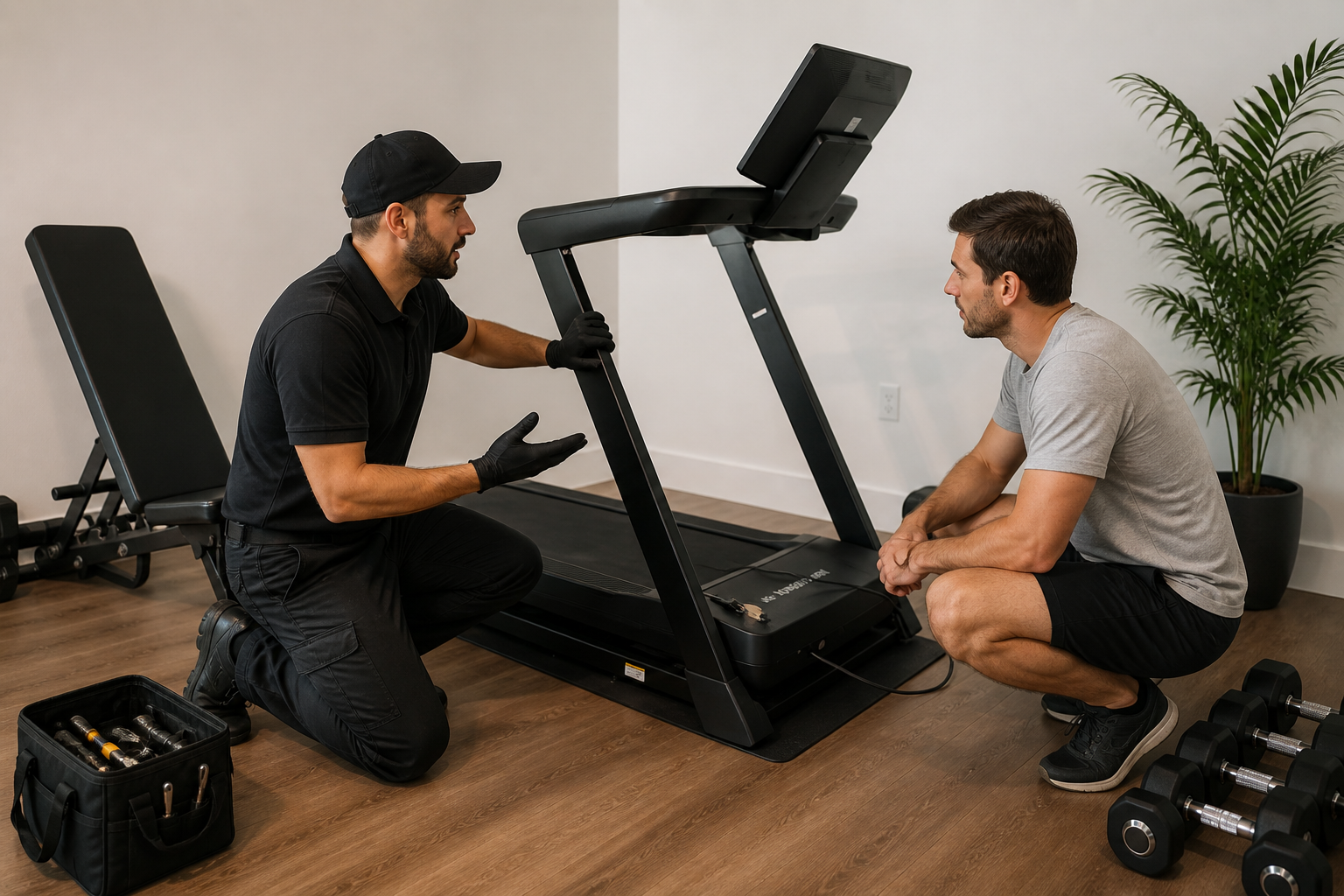

If your FreeMotion cable machine is grinding, skipping, or the cable has jumped its track entirely, a broken or damaged pulley is almost certainly the problem. This is one of the most common cable machine failures we see at 2EZ TEK, and it affects popular models like the FreeMotion Genesis Dual Cable Cross F624, the EXT Dual Cable Cross, and the Epic Series. A failed pulley does not fix itself. Every rep you pull through a damaged pulley puts more stress on the cable, the weight stack, and the remaining hardware. Here is what is actually happening and what you should do about it.
Common Symptoms
- Cable grinding or squealing under load: a worn or seized pulley bearing creates friction and noise as the cable passes over it, especially when resistance is high
- Uneven resistance between sides: one cable feels heavier or stiffer than the other, which usually means a pulley on that side is binding or wobbling
- Cable jumping off the groove mid-exercise: the cable loses its tracking and slips off the pulley wheel, often mid-rep
- Visible cracking, chipping, or wobbling on the pulley wheel: the nylon or composite wheel itself is physically damaged and no longer round or stable
- Frayed or kinked cable near the pulley contact point: a damaged pulley edge acts like a file and cuts into the cable strands over time
- Complete loss of cable movement: the pulley has seized or shattered and the cable cannot move at all
- Intermittent catching or hesitation: the cable moves freely for part of the range of motion, then catches or skips at a specific point in the pull
Root Causes: What Is Actually Happening
- Bearing failure inside the pulley wheel: FreeMotion cable machines use nylon or composite pulley wheels mounted on steel bearings. In high-use commercial environments, the internal bearing races wear down over time. Once the bearing degrades, the pulley wobbles, binds, or seizes, and the cable loses its clean tracking path through the pulley stack.
- Cable misalignment and side loading: when a cable is routed incorrectly after a previous repair or routine adjustment, it rides against the pulley flange instead of sitting in the center groove. This side loading puts uneven pressure on the pulley wheel and accelerates wear. On dual cable cross configurations like the EXT Dual Cable Cross, cable angles shift dynamically during use, which makes proper alignment even more important.
- Impact damage from a snapped or dropped cable: a cable that fails under tension or a weight stack that drops suddenly sends a shock load through the entire cable path. That force travels directly into the pulley wheels and their mounting hardware. Composite pulley wheels can crack or chip from a single high-force event, and the damage is not always visible from the outside at first.
- Corrosion and contamination on the pulley axle: in facilities where machines are cleaned with liquid sprays or located near humidity sources, moisture works into the pulley axle and bearing housing. Rust and corrosion cause the bearing to seize gradually. The pulley starts to feel stiff, then stops rotating freely, and the cable begins dragging instead of gliding.
- Worn cable groove on the pulley surface: over thousands of reps, the cable wears a groove into the pulley surface. Once that groove becomes deep or uneven, the cable no longer sits centered, which throws off the entire cable path from the weight stack through the upper and lower pulley assemblies.
What NOT to Do
- Do not keep using the machine with a damaged pulley: every pull through a cracked or seized pulley frays the cable strands. A cable that is already weakened can fail under load, which is a safety hazard and turns a straightforward pulley replacement into a full cable replacement job as well.
- Do not spray lubricant into a seized bearing: WD-40 and similar sprays do not fix a worn or corroded bearing. They temporarily reduce noise while the bearing continues to degrade, and the spray can contaminate the cable and pulley groove, causing the cable to slip unpredictably.
- Do not attempt to swap the pulley wheel without checking the cable routing: if the cable was misaligned before the pulley failed, installing a new pulley without correcting the routing will cause the same failure again within weeks. The cable path needs to be inspected from the weight stack all the way through every pulley in the system.
- Do not assume the problem is isolated to one pulley: on a dual cable cross machine, the upper pulley, lower pulley, and any intermediate redirect pulleys all work together. If one has failed from wear or impact, the others in the same cable path have likely taken on extra stress and should be inspected at the same time.
Professional Repair in Dallas Fort Worth
2EZ TEK is a fitness equipment repair company serving Dallas Fort Worth with more than 500 five-star reviews from commercial gyms, corporate fitness centers, and residential clients. We stock pulleys, cables, and hardware for FreeMotion models including the Genesis F624, EXT Dual Cable Cross, and Epic Series. When you call us, you are talking to a technician who has repaired these machines dozens of times, not a call center.
We offer same-week service throughout the Dallas Fort Worth area. Our technicians inspect the full cable path during every pulley repair, so you are not paying for a fix that fails again in a month because the root cause was missed. We bring the parts to you and complete the repair on-site in most cases.
Whether you manage a commercial facility with multiple FreeMotion units or you have a single cable cross in your home gym, we handle both. We also service NordicTrack, Life Fitness, Precor, Cybex, and other major cable machine brands throughout the DFW metro.
Frequently Asked Questions
How much does it cost to replace a pulley on a FreeMotion cable machine?
The cost depends on which pulley has failed, whether the cable also needs replacement, and the specific model. A single pulley swap is typically straightforward, but if the cable is frayed or the axle hardware is corroded, those parts add to the job. We give you a clear estimate before any work starts so there are no surprises.
Can I still use the machine if only one side has a bad pulley?
We recommend against it. On a dual cable cross, using one side while the other is damaged puts uneven load on the frame and weight stacks. It also risks further cable damage on the working side if the cable path is affected. The safest move is to take the machine out of service until the repair is done.
How long does a pulley replacement take?
Most pulley replacements on FreeMotion cable machines are completed in a single visit. If the cable also needs to be replaced or if there is corrosion on the axle hardware that requires additional work, the job may take a bit longer. Our technicians come prepared with common parts for FreeMotion models so we are not waiting on a second trip in most cases.
Get It Fixed This Week
Contact 2EZ TEK today to schedule a same-week repair for your FreeMotion cable machine anywhere in Dallas Fort Worth. We will diagnose the full cable path, replace the damaged pulley, and get your machine back in service fast.