
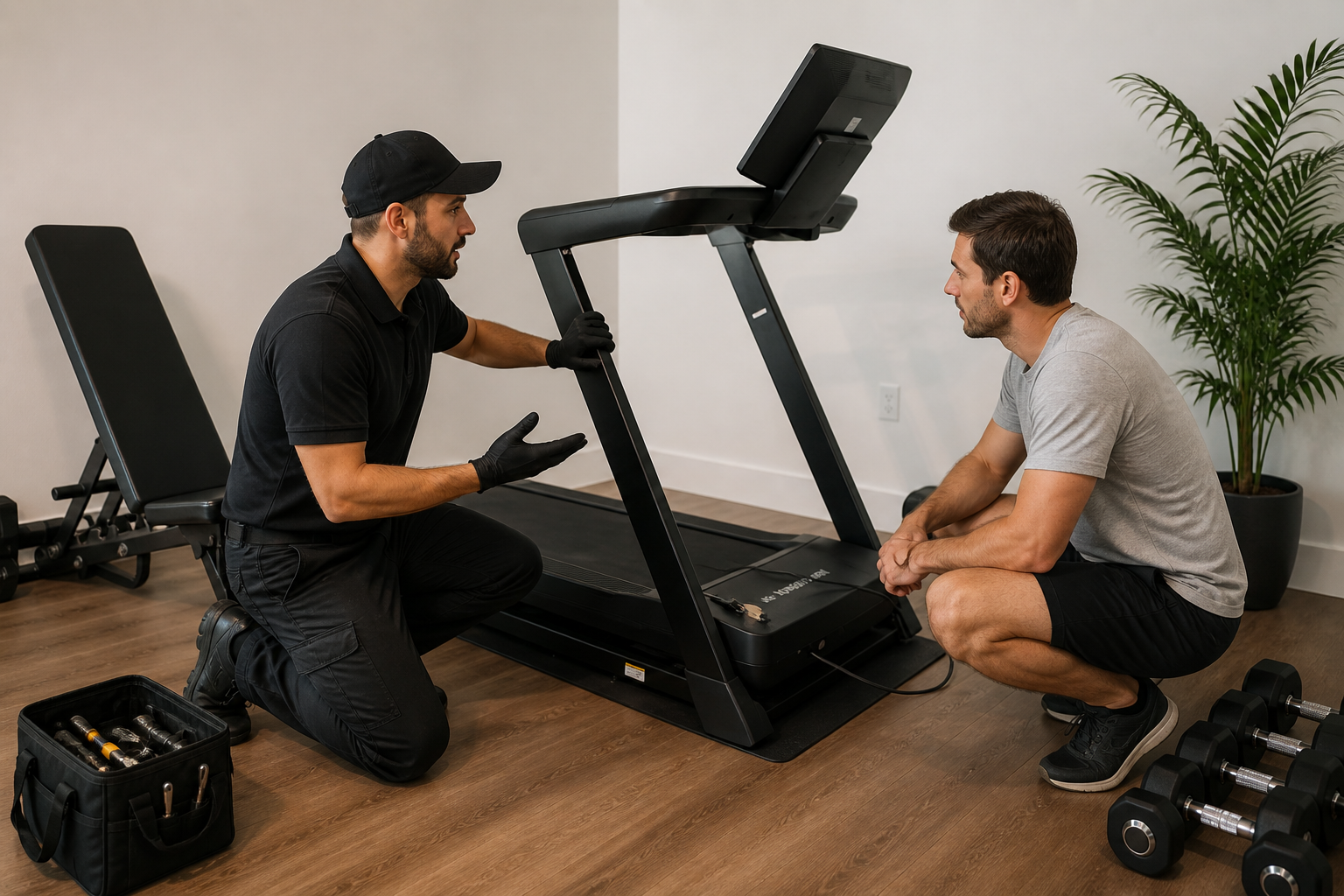

Most quality gym equipment is worth repairing, not replacing, as long as the frame is structurally sound and the failure is in a serviceable component like a drive motor, walking belt, or motor control board. Replacing those parts typically costs a fraction of what a new machine runs. The decision gets more complicated depending on the brand, the age, and what exactly failed, so here is a full breakdown of how we think through this every day.
The Full Answer
The single biggest factor in this decision is the frame. If the welds are solid, the deck is not cracked, and the machine was built by a reputable manufacturer, the mechanical and electronic components that fail are almost always replaceable. Brands like NordicTrack, Precor, Life Fitness, Bowflex, and Sole build machines on frames that can last 15 to 20 years with proper maintenance. The parts that wear out, walking belts, drive motors, motor control boards, incline actuators, and resistance magnets, are designed to be swapped. That is how commercial equipment stays in service for a decade in gyms.
The math usually works out clearly in favor of repair. A new mid-range treadmill runs anywhere from $1,000 to $2,500. A replacement drive motor on that same machine might cost $150 to $400 in parts, with labor on top. A motor control board swap is often in a similar range. Even if a repair runs $400 to $600 all in, you are still well ahead of buying new, and you already know how your machine feels and performs. A brand-new budget machine bought to avoid a repair bill is frequently a step down in quality from what you already own.
Where repair stops making sense is when the frame is compromised, the machine is a low-cost department store brand with no parts availability, or the cost of repair approaches or exceeds replacement value. We see this sometimes with entry-level machines that were sold at big box stores under house brands. Parts simply do not exist for them, or the repair cost outweighs what the machine is worth. That is when we tell customers honestly to put that money toward something better. We would rather give you a straight answer than take your money on a machine that is not going to serve you.
Related Problems to Watch For
- Walking Belt Wear: A worn or stretched walking belt causes slipping, burning smells, and motor strain. Catching this early prevents secondary damage to the drive motor and deck surface.
- Motor Control Board Failure: Error codes, sudden shutoffs, and speed inconsistency often point to the motor control board rather than the motor itself. Replacing the board is usually cheaper than replacing the motor.
- Incline Actuator Problems: If your treadmill incline stops responding or gets stuck, the actuator or its wiring harness is usually the cause. This is a straightforward repair on most machines.
- Reed Switch and Speed Sensor Issues: Ellipticals and treadmills that display erratic speed readings or throw sensor error codes often have a failed reed switch. This is one of the least expensive repairs we do.
- Resistance Magnet Drift on Ellipticals and Bikes: If resistance levels feel inconsistent or the machine does not hold a programmed resistance, the resistance magnet or its control circuit is worth inspecting before assuming the machine is done.
- Flywheel and Bearing Wear: Grinding or rhythmic noise during use on an elliptical or spin bike often comes from worn flywheel bearings. Left alone, this causes progressive damage to surrounding components.
What This Repair Actually Involves
- Diagnostic Visit: A technician comes to your home and runs the machine through its full range of operation, checking motor amperage draw, belt tension and alignment, error code history, and mechanical resistance. This tells us whether the problem is electrical, mechanical, or both.
- Component Identification: Once the failure point is confirmed, we identify the exact part by model number. For common brands, parts are usually available and ship within a few days. For older or discontinued models, we source from secondary suppliers and sometimes refurbished component stock.
- Repair Estimate Before Work Begins: You get a clear parts and labor estimate before we touch anything. If the repair cost does not make sense relative to the machine's value and expected lifespan, we tell you that directly.
- Component Replacement and Testing: The failed part is replaced, whether that is a walking belt, drive motor, motor control board, or actuator, and the machine is tested through multiple speed and resistance levels to confirm the fix held.
- Maintenance Check: While we are already inside the machine, we check belt lubrication, drive belt tension, and any other components showing early wear. Catching a second problem during the same visit saves you a future service call.
When to DIY vs. Call a Technician
Some maintenance tasks are safe and straightforward for homeowners. Lubricating a treadmill walking belt with silicone lubricant, cleaning dust from under the motor hood, and tightening a loose walking belt using the rear roller bolts are all things you can do with basic tools and the owner's manual. If your machine just needs routine upkeep and you are comfortable following instructions, there is no reason to pay for a service call for that level of work.
Anything involving the motor control board, drive motor, wiring harness, incline actuator, or internal flywheel components is a different situation. Working inside the electronics of a treadmill or elliptical without experience creates real risk of damaging a $300 board with a $10 mistake, and some components store electrical charge even when unplugged. If the machine is throwing error codes, making unusual noises, or behaving inconsistently, a diagnostic visit is the right first step. You will know exactly what is wrong and what it costs to fix before committing to anything.
More Questions Customers Ask
How long should a quality treadmill or elliptical last with repairs?
A well-built machine from a reputable brand, maintained and repaired as needed, can realistically last 15 to 20 years in a home environment. Commercial-grade machines sometimes go longer. The key is catching belt wear, lubrication issues, and minor electrical problems before they cause secondary damage to more expensive components like the drive motor or motor control board.
What brands are generally worth repairing versus replacing?
Machines from NordicTrack, ProForm, Life Fitness, Precor, Sole, Bowflex, and Schwinn generally have good parts availability and are worth repairing. Older Icon Fitness machines and many commercial-grade units also hold up well. Where we see repair become difficult is with off-brand or house-brand machines sold through department stores, where parts availability is limited or nonexistent. If you are not sure about your brand, a quick call or message to us can save you time before you schedule anything.
Get This Fixed in Dallas Fort Worth
2EZ TEK serves residential customers throughout the Dallas Fort Worth area, and we know that homeowners often have a harder time finding repair help than gyms and facilities do. Many repair companies in DFW only want commercial accounts, and if you have been turned away before, that is exactly why we are here. Reach out and we will get you scheduled for a same-week diagnostic visit so you can make a smart decision about your machine.