
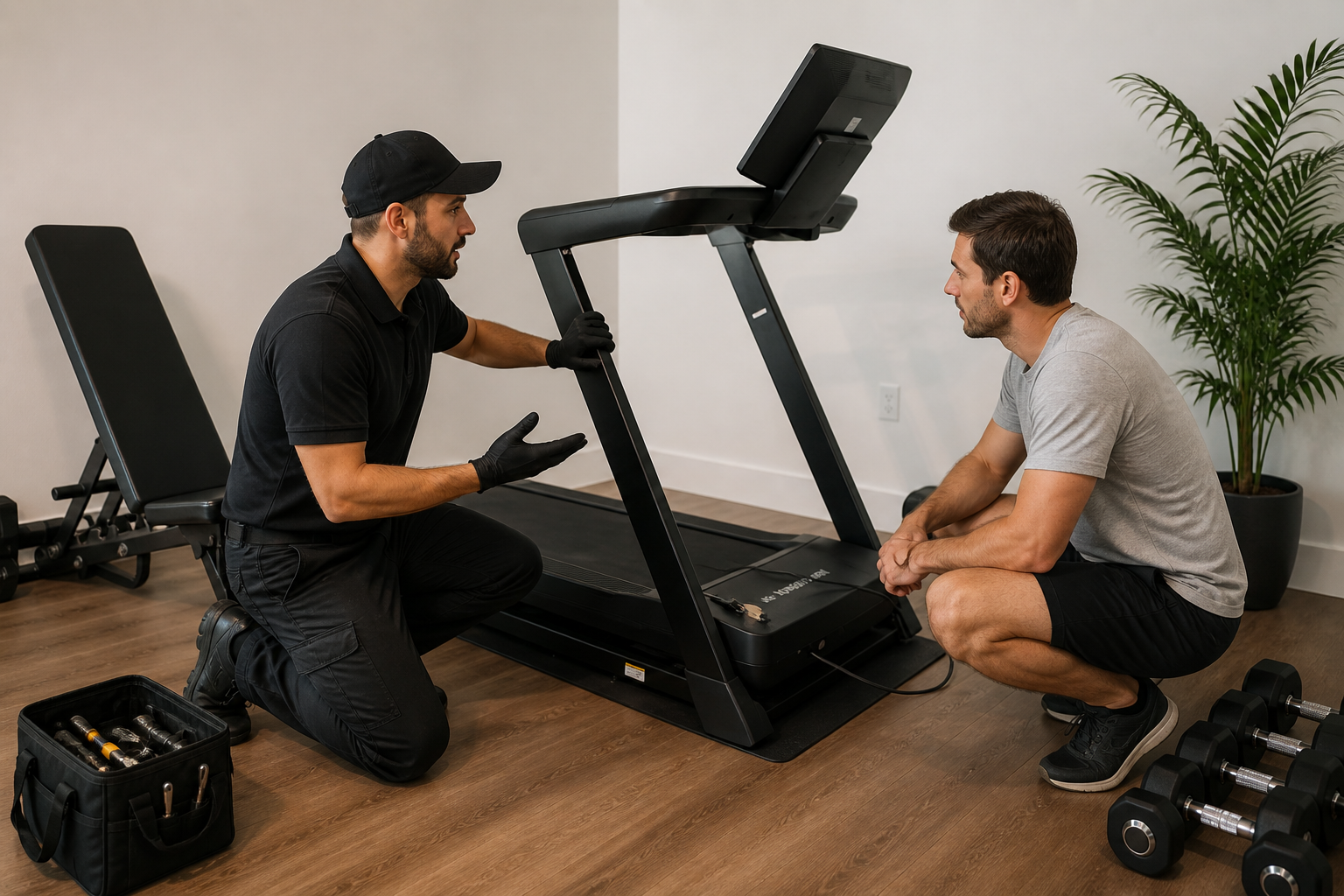

A treadmill belt that drifts to one side is a belt alignment problem, not a slipping problem. Those are two separate issues caused by different things, and they require different fixes. If your belt is only drifting, you adjust the tension bolt on one side of the rear roller. If your belt is also slipping, that is a different conversation entirely.
The Full Answer
Belt drift happens when the rear roller is not sitting perfectly perpendicular to the frame. The walking belt wraps around both the front and rear rollers, and if one end of the rear roller is tighter than the other, the belt will slowly migrate toward the looser side. You fix this by turning the tension bolt on the side the belt is drifting toward, usually in small quarter-turn increments, until the belt tracks down the center of the deck.
Belt slipping is a completely different problem. Slipping happens when there is not enough friction between the walking belt and the drive roller, or when the drive motor does not have enough torque to keep the belt moving under load. Common causes include a worn or glazed walking belt, a worn drive roller, too much belt lubricant applied to the deck, or a failing motor control board that is not delivering consistent voltage to the motor. When you step onto a slipping belt, it hesitates or jerks under your foot. A drifting belt does not do that. It just slowly creeps sideways while running at a normal speed.
The reason people confuse these two is that both problems involve the belt behaving strangely, and both can sometimes be present at the same time. If your belt is drifting and slipping simultaneously, that is where things get complicated. Adjusting the rear roller tension when the belt is also loose from slipping can throw your alignment completely off. The two adjustments interact with each other, and making one without accounting for the other is how people end up with a belt that is both crooked and too tight on one side.
Related Problems to Watch For
- Belt fraying at the edges: If the walking belt has been drifting for a while and rubbing against the side rail or frame, the edges will start to fray. A frayed belt cannot be realigned and run safely. It needs to be replaced.
- Uneven deck wear: A belt that runs off-center puts more wear on one side of the walking deck. Over time this creates an uneven surface that accelerates belt wear even after you correct the alignment.
- Drive roller wear: If slipping has been happening for a while, the rubber coating on the drive roller may be glazed or worn smooth. A worn roller will not grip the belt properly even after you tension it correctly.
- Rear roller bearing failure: A rear roller that wobbles or has a bad bearing can cause intermittent drift that comes and goes. The belt may look centered when the machine is off but drift during use as the roller shifts under load.
- Motor control board voltage issues: If the motor control board is sending inconsistent power to the drive motor, the belt speed will fluctuate. This can feel like slipping but is actually an electrical problem that tension adjustments will not fix.
- Improper lubrication: Too much silicone lubricant under the walking belt reduces friction and causes slipping. Too little causes the belt to drag and overheat. Either condition can make a marginal alignment problem feel much worse.
What This Repair Actually Involves
- Identify which problem you actually have. Run the treadmill at a slow speed, around 2 to 3 mph, and watch the belt for 60 seconds. If it drifts to one side without hesitating under your foot, you have an alignment issue. If it jerks or slows when you step on it, you have a slipping issue. If both happen, stop adjusting and call a technician.
- Check belt tension before touching alignment. Lift the edge of the walking belt at the midpoint of the deck. You should be able to lift it about 2 to 3 inches. If it lifts more than that, the belt is too loose and needs to be tensioned evenly on both sides before any alignment correction is made.
- Adjust the rear roller tension bolt on the drifting side. Use the hex key that came with your treadmill, usually a 6mm Allen wrench. Turn the bolt on the side the belt is drifting toward by a quarter turn clockwise. Run the machine for 60 seconds and observe. Repeat in quarter-turn increments until the belt tracks center. Never turn more than a quarter turn at a time.
- Inspect the drive roller and deck surface. If slipping is also present, pull the motor cover and visually inspect the drive roller for glazing or flat spots. Check the underside of the walking belt for excessive wear or a shiny, hardened surface. These components may need replacement regardless of how well you adjust the tension.
- Test under load. Walk on the treadmill at your normal speed for at least 5 minutes after any adjustment. Belt behavior under body weight is different from belt behavior running empty. A belt that looks centered at idle can still drift once someone is on it.
When to DIY vs. Call a Technician
Correcting a simple belt drift on a treadmill that is otherwise running well is one of the more reasonable DIY repairs a homeowner can attempt. If the belt is only drifting and not slipping, the tension is correct, and the belt is not frayed or worn, a careful quarter-turn adjustment is low risk. The key word is careful. Most people who make the problem worse do so by over-adjusting, turning the bolt too far in one session and then over-correcting in the other direction. Take your time and test between each adjustment.
If you have any slipping happening alongside the drift, or if you have already attempted alignment adjustments and the belt keeps drifting back, stop and call a technician. At that point there is usually a worn component involved, whether that is the drive roller, the walking belt, or the deck itself, and no amount of bolt-turning will fix a worn part. Attempting to tension your way around a mechanical wear problem puts extra stress on the drive motor and motor control board and can turn a straightforward repair into a more expensive one.
More Questions Customers Ask
How often should I lubricate my treadmill belt to prevent these problems?
Most residential treadmills need silicone lubricant applied to the underside of the walking belt every 3 to 6 months, or roughly every 40 hours of use. You apply it by folding back the belt at the midpoint and spreading a thin line of 100 percent silicone lubricant across the center of the deck. Do not use WD-40 or any petroleum-based product. Over-lubricating is just as problematic as under-lubricating. Too much silicone reduces the friction the drive roller needs to move the belt, which contributes directly to slipping.
Can a worn walking belt cause the belt to drift?
A worn walking belt can contribute to drift indirectly. When a belt stretches unevenly due to age or use patterns, one side may become slightly longer than the other, which causes it to track off-center. If you have corrected your rear roller alignment and the belt keeps drifting back within a few sessions, uneven belt stretch is a likely cause. At that point the belt itself needs to be replaced. Running a worn belt also accelerates wear on the walking deck and puts extra load on the drive motor, so replacing it sooner rather than later protects the other components.
Get This Fixed in Dallas Fort Worth
If your treadmill belt is drifting, slipping, or doing both at the same time, 2EZ TEK serves residential customers across Dallas Fort Worth with same-week service. A lot of repair companies in DFW only want commercial gym accounts and will turn homeowners away. We work on home treadmills every day, so give us a call and we will get your machine running straight again.