
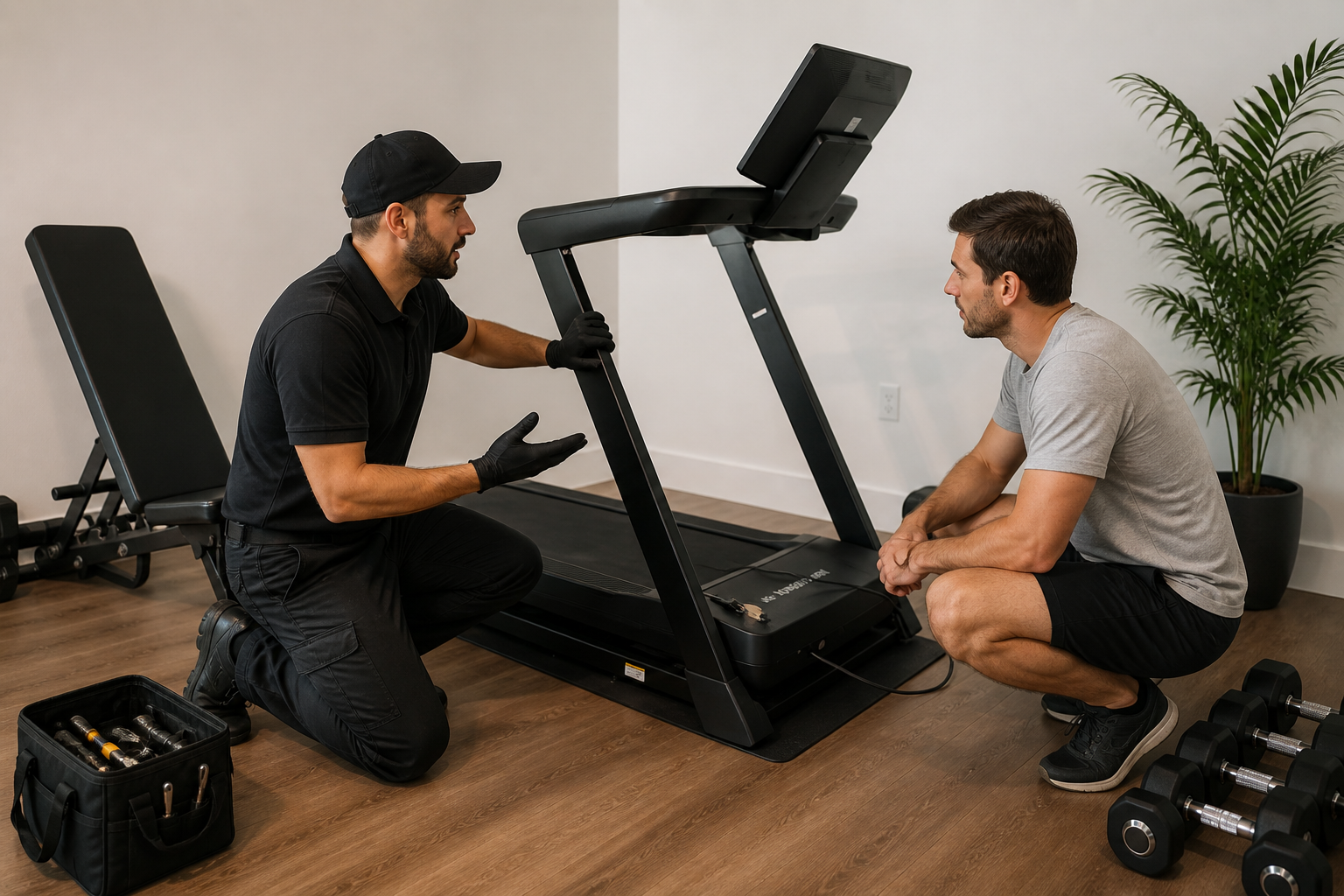

Treadmill repair in Dallas is one of the most common service calls we handle at 2EZ TEK, and the problems we see follow a pretty predictable pattern. Whether your walking belt has stopped moving, the console is throwing error codes, or the machine shuts off mid-workout, most treadmill failures come down to a handful of components that wear out over time. This guide will walk you through what you are likely dealing with, what causes it at the component level, and what to avoid doing before a technician gets there.
Common Symptoms
- Belt slipping or hesitating under load: You step onto the treadmill and the walking belt lags, jerks, or slips when you put your full weight on it. This is one of the most reported issues we see across Dallas homes.
- Machine shuts off unexpectedly: The treadmill powers down mid-run with no warning. Sometimes it throws an error code, sometimes it just goes dark. Both scenarios point to specific components that need testing.
- Burning smell during use: A sharp, acrid smell coming from under the motor hood usually means the walking belt is generating excessive friction against the deck, or the drive motor is overheating under strain.
- Loud grinding or squealing noise: Noise that changes with belt speed is almost always mechanical. Worn bearings in the front or rear roller, a dry walking belt, or a failing tension roller are the usual suspects.
- Incline not responding or stuck: The incline actuator moves the front of the treadmill up and down using a motorized screw drive. When it fails, the deck either stays flat, makes a grinding sound, or raises but will not lower.
- Console display is blank or flickering: If the screen is dead or unstable, the issue is often not the console itself. A failing motor control board or a loose wiring harness connection can cut power to the display.
- Error codes on the display: Codes like E1, E2, or LS on popular brands usually indicate a speed sensor fault, often traced back to a worn reed switch or misaligned magnet on the front roller.
Root Causes: What Is Actually Happening
- Walking belt and deck wear: The walking belt rides on a phenolic deck surface. Over time, the underside of the belt and the top of the deck lose their lubrication layer and create friction. That friction forces the drive motor to work harder, which raises current draw, generates heat, and eventually trips thermal protection or burns out the motor control board. Most manufacturers recommend lubricating the deck every three to six months, but most homeowners never do it.
- Drive motor failure: The drive motor is the heart of the machine. It runs every time the belt moves. Brushed DC motors, which are standard on most residential treadmills, wear down their carbon brushes over years of use. Once the brushes are gone, the motor loses torque, runs hot, and eventually stops turning. You will usually notice belt hesitation and a burning smell before full failure.
- Motor control board faults: The motor control board regulates power delivery to the drive motor. Voltage spikes, heat buildup, and simple component aging cause capacitors and transistors on the board to fail. A bad motor control board can mimic a dead motor, so testing both before replacing either one is something a technician should always do.
- Reed switch and speed sensor issues: The reed switch is a small magnetic sensor mounted near the front roller. A magnet on the roller passes it with every rotation, sending a speed signal to the controller. When the reed switch drifts out of alignment or fails, the controller thinks the belt has stopped and shuts the machine down. This is one of the most misdiagnosed problems on treadmills because the symptom looks like a motor or board issue.
- Incline actuator and lift motor problems: The incline actuator uses a small electric motor to drive a threaded rod that raises and lowers the front of the treadmill. The actuator can fail mechanically if the screw drive binds, or electrically if the lift motor burns out. A failed position sensor inside the actuator can also cause the incline to overshoot or refuse to move at all.
- Worn or stretched walking belt: A walking belt that has stretched beyond spec will slip under load even if the drive motor and tension roller are fine. You can test this by checking belt tension at the center of the deck. If it lifts more than two to three inches, the belt needs replacement, not just adjustment.
What NOT to Do
- Do not crank up the tension bolt to fix belt slip: Over-tightening the rear tension roller puts extreme stress on the drive motor, front and rear roller bearings, and the walking belt itself. It turns a simple lubrication or belt replacement job into a much more expensive repair. Belt tension should be set to spec, not cranked until the slip stops.
- Do not spray WD-40 under the belt: WD-40 is a solvent and water displacer, not a lubricant. Applying it to a treadmill deck will temporarily reduce friction but will dry out the belt and deck surface faster, accelerate wear, and can damage the walking belt material. Use 100 percent silicone treadmill lubricant only.
- Do not keep running the machine when you smell burning: That smell is either the belt and deck destroying each other or the drive motor overheating. Continuing to use the treadmill in this condition can turn a belt and lube service into a full motor or board replacement. Stop using it and call a technician.
- Do not replace the motor control board without testing it first: Boards are expensive, often $150 to $400 depending on the brand. A bad reed switch, a grounded motor, or a shorted wiring harness can all look like a dead board on the surface. Replacing the board without diagnosing the root cause means you may install a new board into the same fault condition and burn it out again immediately.
Professional Treadmill Repair in Dallas Fort Worth
At 2EZ TEK, we have handled treadmill repairs across Dallas, Fort Worth, Plano, Frisco, Arlington, and the surrounding DFW area for years, building a reputation that now sits at over 500 five-star reviews. We service all major residential brands including NordicTrack, ProForm, Bowflex, Sole, Horizon, Life Fitness, Precor, and Peloton. When you call us, you get a real technician who has seen your specific problem before, not a call center scheduling someone who has never touched a treadmill.
One thing that sets 2EZ TEK apart in DFW is that we actually serve residential homeowners. A lot of people are surprised to find out that many repair companies in this area focus exclusively on commercial gyms and fitness facilities. They will turn away a homeowner with a single treadmill in their garage or spare bedroom. We built our business around residential clients, and the majority of our calls come from people with one machine at home that they depend on. Same-week service is our standard, and we come to you with the parts and tools to handle most repairs on the first visit.
We also do not just swap parts and leave. Every treadmill repair we complete includes a full inspection of the walking belt condition, deck lubrication, belt tension, roller alignment, and a test of the motor control board and drive motor under load. If something else is about to fail, we tell you before it becomes another service call.
Frequently Asked Questions
How much does treadmill repair cost in Dallas?
Most residential treadmill repairs in the Dallas area fall between $150 and $400 depending on what failed. A walking belt replacement with lubrication typically runs less than a motor control board replacement. We give you a firm quote before any work starts so there are no surprises. Diagnostic fees are applied toward the repair if you move forward.
Is it worth repairing an older treadmill or should I just buy a new one?
In most cases, repair is worth it if the frame and console are in good shape. A quality treadmill that cost $1,500 or more new can run for another five to ten years with a motor or belt replacement that costs a fraction of replacement. We will tell you honestly if the machine is not worth the repair cost. We have no interest in fixing something that is going to fail again in three months.
How long does a treadmill repair appointment take?
Most repairs are completed in one to two hours on site. We carry common parts for popular brands in our service vehicles, which eliminates most return trips. If a part needs to be ordered, we will give you a realistic timeline upfront. We do not leave you waiting weeks for a callback.
Ready to Get It Fixed?
Contact 2EZ TEK today to schedule your treadmill repair in Dallas Fort Worth. We respond fast, come to your home, and get your machine running right.