
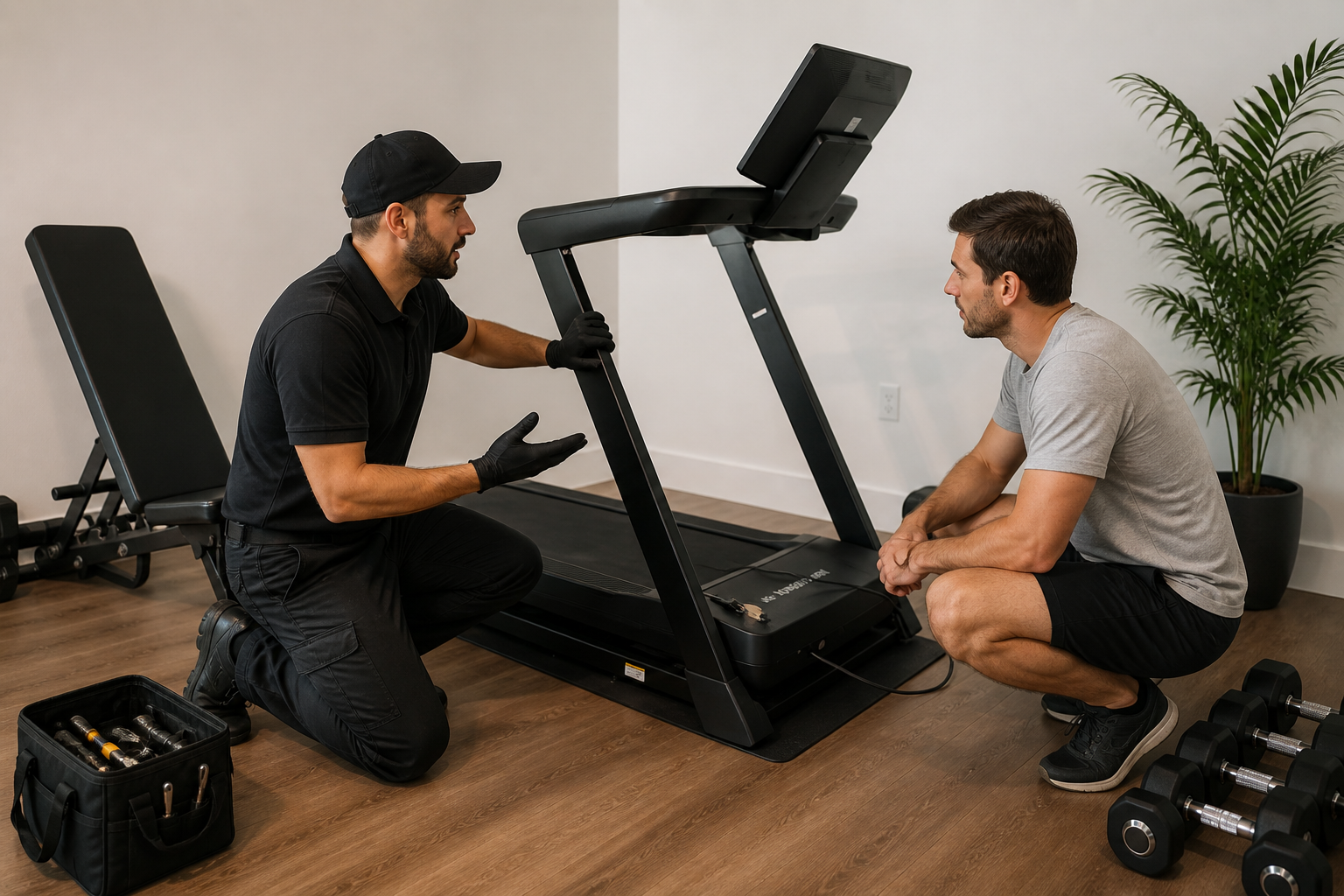

Treadmill repair in Dallas is one of the most common service calls we run at 2EZ TEK, and most of the machines we see have the same handful of problems. Whether your belt is slipping, the motor is cutting out, or the console went dark after a power surge, this guide walks you through what is actually happening inside the machine, what not to touch before a technician arrives, and how to get it fixed fast without overpaying a national franchise that treats your home gym like an afterthought.
Common Symptoms
- Belt slipping or hesitating under load: You step on the treadmill and the walking belt jerks, slows, or stutters when you put your full weight on it. This is one of the most reported complaints we hear from Dallas homeowners.
- Burning smell during or after use: A sharp, acrid smell usually means the walking belt is dragging against the deck due to friction, or the drive motor is overheating from excessive resistance.
- Treadmill shuts off mid-workout: The machine powers down unexpectedly. This can be a thermal cutoff on the drive motor, a failing motor control board, or a loose safety key connection.
- Speed is inconsistent or inaccurate: The display reads 5.0 mph but the belt feels like it is running at 3.5. This points to a worn reed switch, a damaged speed sensor magnet, or a motor control board that is no longer regulating output correctly.
- Incline stops working or gets stuck: The incline actuator moves the front of the deck up and down. When it fails, the deck either stays flat, drifts down on its own, or throws an error code on the console.
- Loud grinding, squealing, or thumping noise: A rhythmic thump usually means a worn or misaligned walking belt. Grinding often comes from a failing tension roller or front roller bearing. Squealing can be the drive belt slipping on the motor pulley.
- Console is dead or shows error codes: No display, a flickering screen, or a persistent error code after restart usually points to the motor control board, a blown fuse, or a failed console wire harness.
Root Causes: What Is Actually Happening
- Walking belt wear and improper lubrication: The walking belt rides on a phenolic deck and needs silicone lubricant applied underneath at regular intervals. Most homeowners skip this entirely. When the belt runs dry, friction builds, the drive motor works harder than it should, and both the belt and deck wear out faster than they should. By the time we get the call, the belt is often glazed on the underside and the deck surface is scored.
- Drive motor failure: The drive motor is what actually moves the belt. In residential machines, these motors are rated for a specific duty cycle. Running the treadmill for long sessions at high speeds without adequate lubrication puts the motor under sustained load it was not designed to handle. The brushes wear down, the armature overheats, and eventually the motor stops producing enough torque to move the belt under body weight.
- Motor control board burnout: The motor control board regulates the voltage sent to the drive motor. When a motor starts drawing excess current because of a worn belt or failing components, that excess load can fry the control board. Power surges during Texas storms are another common culprit. We see a lot of burned boards in Dallas after storm season.
- Reed switch and speed sensor failure: The reed switch is a small magnetic sensor that reads the rotation of the front roller to report speed to the console. When the magnet on the roller degrades or the switch itself fails, the board loses its speed feedback signal. The result is erratic speed, a console that reads zero mph while the belt is moving, or a machine that cuts power because it thinks something is wrong.
- Incline actuator and lift motor problems: The incline actuator is a linear motor that physically raises and lowers the front of the treadmill. These units can fail from worn gears inside the actuator, a broken position sensor, or a wiring harness that has cracked from repeated movement over years of use. When the actuator fails mid-incline, the machine usually throws an error and locks out until the issue is resolved.
- Tension roller and rear roller bearing wear: The tension roller keeps the walking belt taut. Over time the bearings inside the roller wear out, creating grinding noise and allowing the belt to go slack. A loose belt causes slipping, uneven wear, and puts extra strain on the drive motor. Replacing rollers is a straightforward job but it requires proper tensioning after installation or the belt will track off to one side.
What NOT to Do
- Do not over-tighten the walking belt yourself: A lot of homeowners read that a slipping belt needs to be tightened and crank the rear roller bolts until the belt is drum-tight. An over-tensioned belt puts enormous strain on the drive motor, the front roller bearings, and the motor control board. We have seen motors burn out within days of an over-tightening job. Belt tension needs to be set to spec, not by feel.
- Do not spray WD-40 under the belt: WD-40 is a solvent and water displacer, not a lubricant for treadmill decks. It will temporarily reduce friction but it degrades the belt material and leaves a residue that attracts debris. The only product that belongs under a treadmill belt is 100 percent silicone lubricant.
- Do not keep running the machine if it smells like burning: That smell is either the belt destroying the deck surface or the motor overheating. Every minute you run it in that condition adds cost to the repair. Shut it down and leave it off until a technician looks at it.
- Do not assume a dead console means you need a new treadmill: Console failures and motor control board failures are repairable in most cases. Replacement boards are available for most major brands. Buying a new machine because the display went dark is almost always unnecessary and expensive.
Professional Treadmill Repair in Dallas Fort Worth
At 2EZ TEK, we have built our reputation in the Dallas Fort Worth area on one thing: showing up fast and fixing it right the first time. We carry parts for the most common treadmill brands including NordicTrack, ProForm, Bowflex, Sole, Life Fitness, Precor, and Horizon. Most repairs are completed in a single visit. We have earned over 500 five-star reviews from real customers across DFW, and we book same-week appointments so your machine is not sitting broken in a spare bedroom for three weeks waiting on a franchise dispatch queue.
One thing that sets 2EZ TEK apart in this market is that we actively serve residential homeowners. Many of our competitors in Dallas focus exclusively on commercial gyms and fitness facilities. They will turn away a homeowner with a single treadmill because the ticket size does not fit their business model. We built 2EZ TEK specifically to serve people who have fitness equipment at home, and residential repairs make up a large portion of our weekly schedule. Your home gym matters to us as much as any commercial account.
We service customers throughout Dallas, Fort Worth, Plano, Frisco, McKinney, Arlington, Irving, Garland, and the surrounding DFW metro. If your treadmill is down, we can usually get a technician to you within the same week. No runaround, no call centers, no upselling you on a maintenance contract you do not need.
Frequently Asked Questions
How much does treadmill repair cost in Dallas?
Most treadmill repairs in the Dallas area fall between $150 and $400 depending on what failed. A belt and deck replacement with lubrication typically runs $200 to $300 including parts and labor. A motor control board swap can be $250 to $450 depending on the board. Drive motor replacements vary widely by brand. We give you a firm quote before any work starts so there are no surprises on the invoice.
Is it worth repairing an older treadmill or should I just buy a new one?
In most cases, repair is the better financial decision unless the frame itself is damaged or the machine is more than 15 years old with multiple simultaneous failures. A quality treadmill that originally cost $1,500 or more is worth repairing if the fix is under $400. We will always give you an honest assessment. If the repair cost does not make sense relative to the machine's value, we will tell you that directly rather than take your money on a machine that has reached the end of its useful life.
How long does a treadmill repair appointment take?
Most residential treadmill repairs take between 45 minutes and 2 hours on-site. Simple jobs like belt lubrication, belt replacement, or a reed switch swap are on the faster end. Motor control board replacements and drive motor swaps take a bit longer because the machine has to be partially disassembled. We bring common parts on the truck so we are not making a second trip in most cases.
Ready to Get It Fixed?
Contact 2EZ TEK today to schedule your treadmill repair in Dallas Fort Worth. We respond fast, we come to you, and we get your machine running again the right way.