
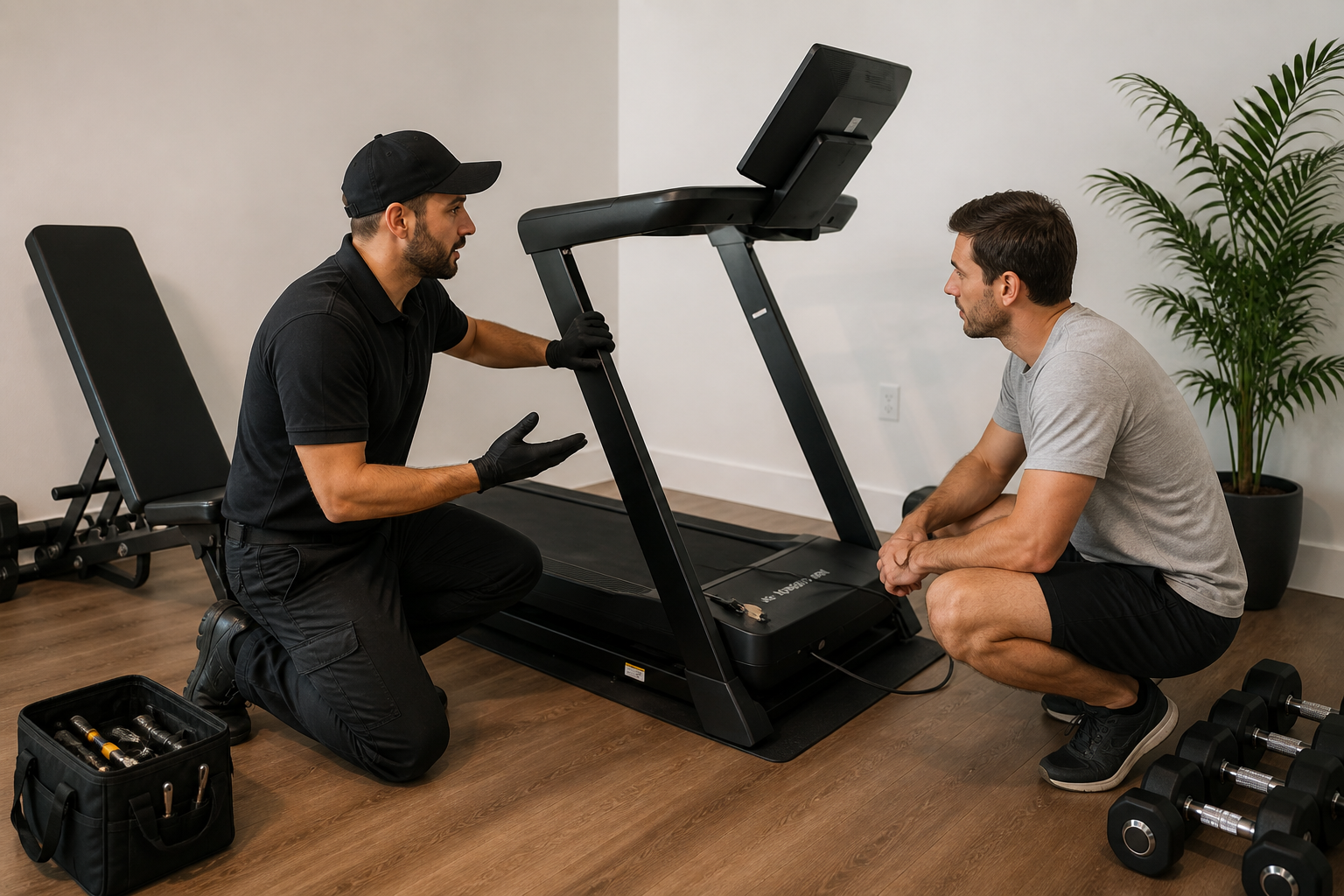

Your treadmill belt slips at higher speeds because the friction and load between the walking belt and the deck increase dramatically as you run, and any existing weakness in tension or lubrication gets exposed under that added stress. At a slow walk, a slightly loose belt or a dry deck can still function well enough to feel normal. Push the speed up to a jog or a run, and that same marginal condition turns into a noticeable slip or stutter under your feet. The fix is usually a combination of belt tension adjustment, silicone lubrication, and in some cases a deck replacement.
The Full Answer
When you walk slowly on a treadmill, the drive motor is working at a relatively low torque output and the walking belt does not need much grip on the deck surface to keep moving smoothly. The rear roller, also called the tension roller, holds the belt snug enough to stay in place. But when you increase speed, the motor has to work harder, the belt moves faster, and your foot strike creates a much larger downward and backward force against the belt surface. If the belt is even slightly undertensioned, it will momentarily slip backward against the deck instead of staying locked to the roller. That slip is what you feel as a stutter or a lurch under your foot.
Lubrication plays a huge role here. The underside of the walking belt rides directly on the deck board, and that contact surface needs a thin layer of silicone lubricant to reduce friction. When the lubricant dries out, the belt has to work against a much higher drag force from the deck. At slow speeds, the motor can overcome that drag without much trouble. At higher speeds, the increased drag combined with the impact of running can cause the belt to hesitate or slip. We see this constantly on machines in the Dallas Fort Worth area that have not been serviced in a year or more. The Texas heat accelerates lubricant breakdown, so machines here often need attention sooner than the manufacturer schedule suggests.
The deck itself is the third factor. Deck boards have a wax or phenolic coating on the surface that reduces friction and protects the belt. Over time, that coating wears away, especially in the center lane where your feet land. A worn deck creates a high-friction zone that the belt has to drag across on every revolution. At low speeds this may not cause a noticeable slip, but at running speeds the belt simply cannot overcome the resistance fast enough and it slips. A worn deck also accelerates belt wear, so if you ignore it long enough you end up replacing both components instead of just one.
Related Problems to Watch For
- Belt drifting to one side: If the walking belt is also tracking left or right, the rear roller is likely out of alignment. Tension adjustments on one side only will make the drift worse if alignment is not corrected first.
- Motor running hot or shutting down during runs: A slipping belt puts extra load on the drive motor. If the motor is working harder than it should because of a dry deck or undertensioned belt, it can overheat and trigger a thermal cutoff. You may notice the machine slowing down and stopping mid-workout.
- Burning smell during use: A dry belt dragging hard against a worn deck generates heat and sometimes a faint burning or rubber smell. Do not ignore this. It means the belt and deck are wearing against each other rapidly.
- Motor control board errors: The motor control board monitors current draw from the drive motor. When the belt slips or the deck creates excess drag, the motor pulls more current than normal. Some machines will throw an error code or simply cut power to protect the board.
- Worn rear roller bearings: If the tension roller bearings are worn, the roller cannot grip the belt consistently. This shows up most at higher speeds when the belt tension demands are highest. You may hear a grinding or squeaking from the rear of the machine.
- Belt fraying on the edges: Consistent slipping and misalignment causes the belt edges to contact the roller end caps repeatedly. Check the inner edges of the belt for fraying or cracking, which indicates the belt has been running stressed for a while.
What This Repair Actually Involves
- Initial diagnostic at speed: A technician will run the treadmill at multiple speeds and observe the belt behavior directly. This confirms whether the slip is consistent, speed-dependent, or load-dependent. Sometimes stepping on the belt while it runs at a set speed tells you immediately whether tension or lubrication is the primary issue.
- Deck and belt inspection: The walking belt gets lifted at the sides to inspect the underside of the belt and the top surface of the deck. A worn deck will show visible discoloration, scoring, or a rough texture in the center lane. The belt underside will show glazing or cracking if it has been running dry or slipping for an extended period.
- Lubrication application: If the deck surface is still serviceable, a proper silicone lubricant is applied between the belt and deck. This is not WD-40 or any petroleum-based product. It is a specific low-viscosity silicone that stays in place without breaking down the belt material.
- Belt tension and alignment adjustment: The rear roller tension bolts are adjusted evenly to bring the belt to the correct tension. Too tight causes motor strain and premature belt wear. Too loose causes slipping. After tensioning, the belt tracking is checked and the roller is aligned so the belt runs centered on the deck.
- Post-repair speed test: The machine is run at walking, jogging, and running speeds with load applied to confirm the slip is gone. If the belt still slips after lubrication and tensioning, the deck is flagged for replacement and the belt is evaluated for replacement at the same time.
When to DIY vs. Call a Technician
Applying silicone lubricant is something most homeowners can do safely if they follow the manufacturer instructions and use the correct product. Lifting the belt at the sides and applying lubricant down the center of the deck is straightforward on most machines. Basic belt tension adjustment using the hex bolts at the rear roller is also manageable if you make small, equal turns on both sides and test frequently. If the slipping improves after lubrication and a minor tension adjustment, you may not need a service call at all.
If the belt continues to slip after those steps, or if you notice burning smells, error codes, unusual noises from the motor or rollers, or visible wear on the deck surface, stop using the machine and call a technician. Continuing to run on a worn deck will destroy the belt faster and can put extra strain on the drive motor and motor control board. Replacing a deck and belt together is a reasonable repair cost. Replacing a deck, belt, and motor control board because the problem was ignored is a much larger bill. A technician can also tell you quickly whether the machine is worth repairing or whether the wear is advanced enough that replacement makes more financial sense.
More Questions Customers Ask
How often should I lubricate my treadmill belt?
Most manufacturers recommend lubricating the walking belt every three to six months under normal residential use, or every 150 hours of operation. In the Dallas Fort Worth area, the heat can dry out silicone lubricant faster than in cooler climates, so erring toward the three-month schedule makes sense if you use the machine regularly. A simple test is to reach under the belt from the side and feel the deck surface. If it feels dry or slightly rough rather than slick, it is time to lubricate regardless of the calendar.
Can a slipping belt damage my treadmill motor?
Yes, it can. When the walking belt slips, the drive motor has to compensate by pulling more current to maintain the set speed. Over time, this extra current draw generates heat in the motor windings and puts stress on the motor control board. If the motor control board detects sustained overcurrent, it may shut the machine down to protect itself, but repeated stress cycles can shorten the lifespan of both components. Fixing a belt slip early is almost always cheaper than dealing with a motor or motor control board failure later.
Get This Fixed in Dallas Fort Worth
2EZ TEK serves residential customers across the Dallas Fort Worth area with same-week treadmill repair, and we know that most homeowners with a treadmill in the spare bedroom or a garage gym have been turned away by companies that only want commercial accounts. We work on home machines every day, and a belt slip diagnosis is one of the most common calls we get. Reach out to 2EZ TEK to schedule your service appointment and get your treadmill running right again.