

What Preventive Maintenance Actually Means for Cardio Equipment
Preventive maintenance, or PM, is a scheduled service performed on fitness equipment before something breaks. It is not a response to a problem. It is the work done to stop problems from developing in the first place. On cardio equipment, that means inspecting, cleaning, lubricating, adjusting, and testing components on a regular interval, whether the machine seems fine or not.
Most homeowners and even some gym managers treat cardio equipment like a household appliance. They assume it will run until it stops. That mindset works fine for a toaster. It does not work for a treadmill with a 3.0 HP motor, a belt running at 12 mph, and electronics managing speed, incline, and heart rate simultaneously. These are mechanical and electrical systems under real stress, and they degrade in predictable ways that PM is specifically designed to catch.
Why Cardio Equipment Degrades Even When It Seems Fine
Every time someone steps on a treadmill, the belt stretches slightly, the deck surface wears, and the drive motor works harder to maintain speed. Over hundreds of hours, that friction builds up. The motor draws more current to compensate. The controller runs hotter. The belt tension drifts. None of this is visible to the user until the machine slows under load, throws an error code, or stops mid-workout.
Ellipticals develop looseness in their linkage arms and pivot points. Stationary bikes wear through their bottom bracket bearings and resistance mechanisms. Rowing machines accumulate debris in their rail channels and develop slack in their drive chains or cords. These are not random failures. They follow patterns that experienced technicians recognize immediately.
The Three Things PM Actually Prevents
Premature Component Wear
A treadmill belt running on a dry deck wears out in a fraction of the time it should. Proper lubrication, applied to the right area in the right amount, reduces friction and extends belt and deck life significantly. The same principle applies to drive belts, roller bearings, and pivot joints throughout any cardio machine. PM keeps components operating within their designed tolerances instead of grinding themselves down ahead of schedule.
Unsafe Operating Conditions
This is the part most people do not think about until something goes wrong. A loose console mount can fail and injure a user. A frayed power cord is a fire and shock hazard. A treadmill belt that has shifted off-center can catch and throw a person. A worn incline motor can drop the deck suddenly under load. These are not hypothetical scenarios. They are the kinds of conditions a certified technician finds during routine PM inspections on equipment that the owner believed was working fine.
Sudden Equipment Failures
From a gym manager's perspective, a treadmill that fails during peak hours is not just a repair bill. It is lost revenue, a frustrated member, and a potential liability issue if the failure caused injury. For a home gym owner, it means weeks without equipment while parts are ordered and a technician is scheduled. PM catches the warning signs before they become failures, things like abnormal motor current draw, unusual vibration, error codes that clear on their own, and worn components that are close to their service limit.
What a Certified Technician Does During a PM Visit
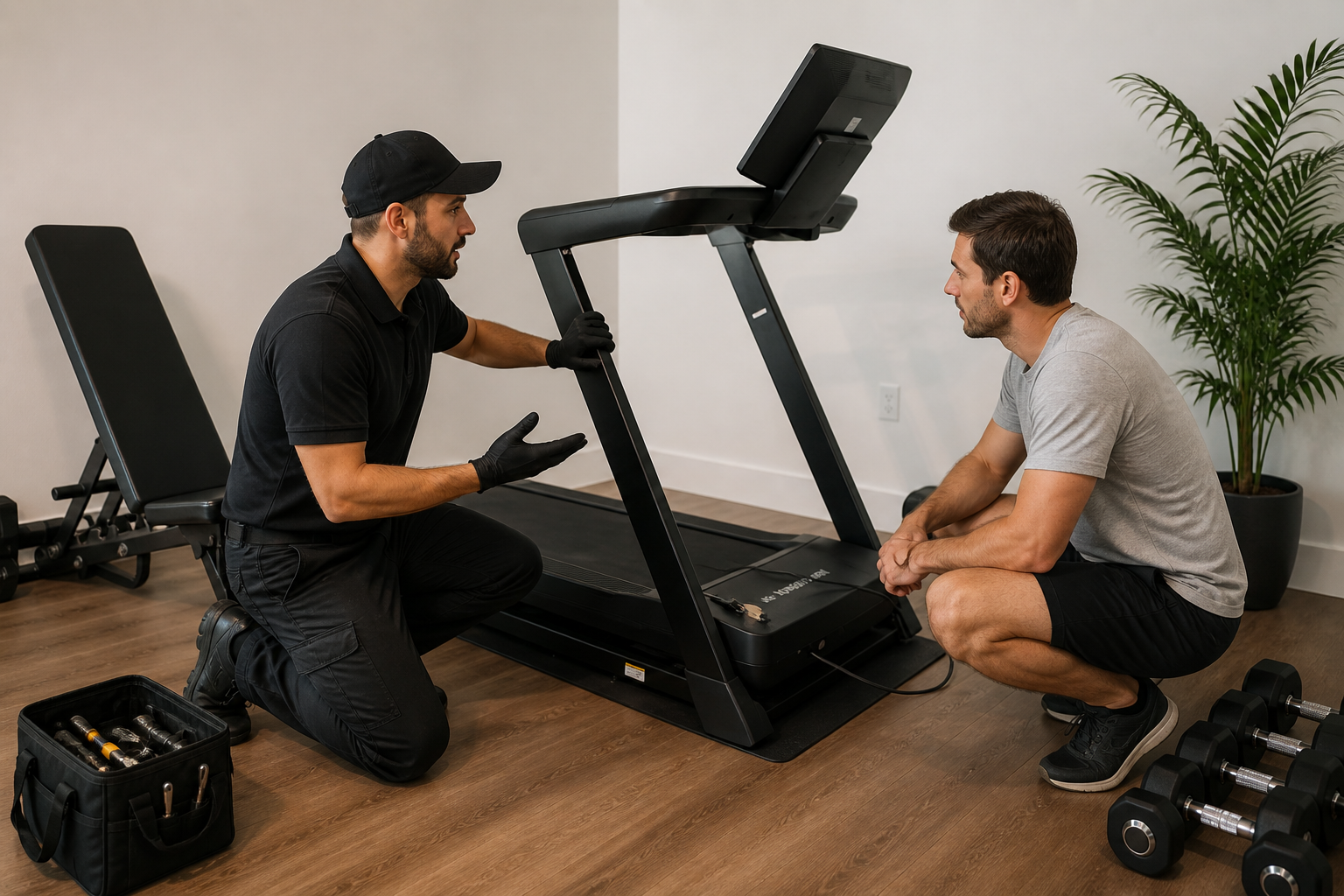
A proper PM on cardio equipment is not a wipe-down and a belt lube. Here is what a qualified technician actually does:
- Inspects the frame, welds, and hardware for structural integrity
- Checks belt tension, alignment, and surface wear on treadmills
- Lubricates the deck and any pivot or bearing points requiring lubrication
- Tests motor current draw under load to assess motor and controller health
- Inspects all electrical connections, wiring harnesses, and power components
- Checks console function, sensor accuracy, and emergency stop operation
- Evaluates resistance mechanisms, drive systems, and moving linkages on ellipticals, bikes, and rowers
- Tightens all fasteners and adjusts any components outside of spec
- Documents findings and flags any parts approaching end of service life
That last point matters. A good PM visit gives you a clear picture of what your equipment needs now and what it will likely need in the next six to twelve months. That is information you can plan around instead of react to.
How Often Does Cardio Equipment Need PM?
For home gym equipment used by one or two people, a professional PM once a year is a reasonable baseline. For commercial gyms in DFW where machines run eight to twelve hours a day, quarterly PM is standard on high-use units. Treadmills generally need more frequent attention than ellipticals or bikes because of the continuous belt-to-deck contact and the higher motor load.
2EZ TEK Handles PM for Home Gyms and Commercial Facilities Across DFW
The technicians at 2EZ TEK are nationally certified and have serviced hundreds of cardio units across the Dallas Fort Worth area, from single treadmills in home gyms to full commercial floors with dozens of machines. Every PM visit is performed on-site, at your location, with no teardown and transport required.
Owner Robby Turner brings a Six Sigma Black Belt approach to every service call, which means systematic inspection, documented findings, and repairs that address root causes rather than surface symptoms. That is why 2EZ TEK carries a 4.9-star rating across more than 500 reviews.
If your cardio equipment has not had a professional PM in the last year, or if you manage a gym and you are not on a scheduled maintenance plan, call 2EZ TEK at (972) 807-7232 to schedule a visit. Catching problems early is always less expensive than replacing components that failed because nobody was looking.